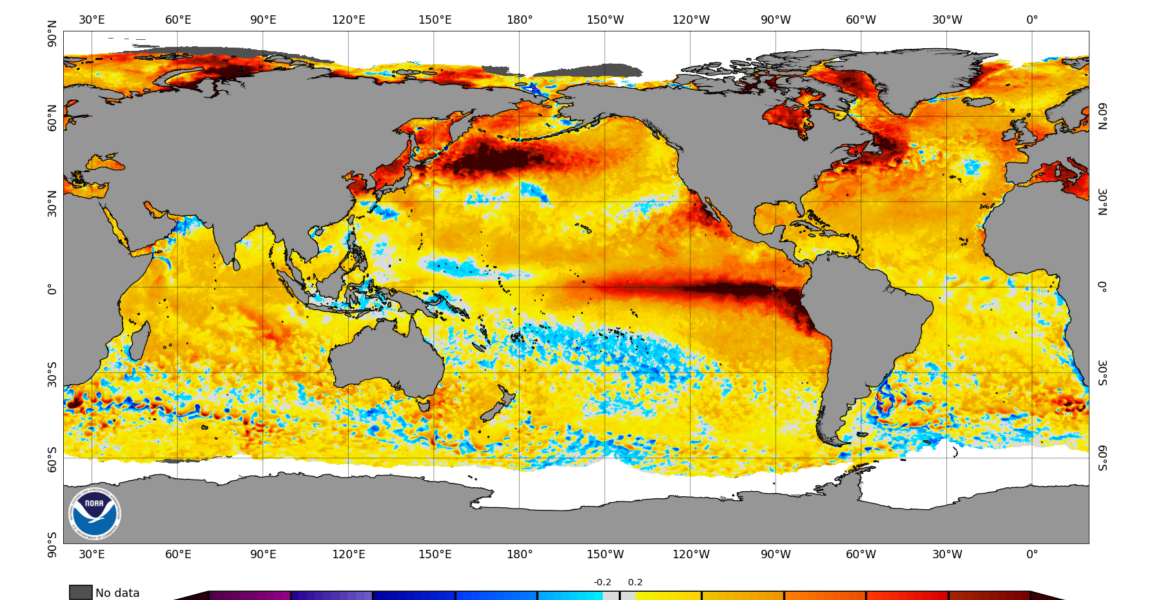
Key Takeaways
- Study finds El Niño events are now more intense.
- Reconstructed ocean temperature records show unprecedented strength.
- Scientists link increased intensity to global warming.
A new study has revealed that El Niño events are now stronger than at any point in the last 1,000 years, according to environmental scientist Julie Cole from the University of Michigan. This finding challenges previous assumptions about the natural variability of El Niño events.
Cole's team used fossilized Galápagos corals to reconstruct a thousand-year-long ocean surface temperature record, providing a clearer picture of past climate patterns. This method allowed them to compare current El Niño events with historical data, confirming the unprecedented intensity of recent events.
The study highlights the significant impact of global warming on the El Niño–Southern Oscillation (ENSO) system. While natural variability plays a role, the added energy from rising temperatures is contributing to more dramatic swings in the ENSO system.
The findings have implications for weather patterns worldwide, as El Niño events can significantly alter rainfall distribution across the tropics. Australia, for instance, has experienced drier conditions, while parts of Peru have faced severe flooding.
The research underscores the need for continued monitoring and adaptation strategies to mitigate the effects of more intense El Niño events. As global temperatures continue to rise, the frequency and intensity of such events may increase, posing challenges for affected regions.
Scientists caution that while the current El Niño events are unprecedented, the exact mechanisms driving their intensity remain complex and require further investigation. However, the consensus is that human-induced climate change is playing a significant role.
The study's conclusions are based on robust data and methodologies, providing a clearer understanding of the ENSO system's behavior over the past millennium. This knowledge is crucial for improving climate models and predicting future weather patterns.