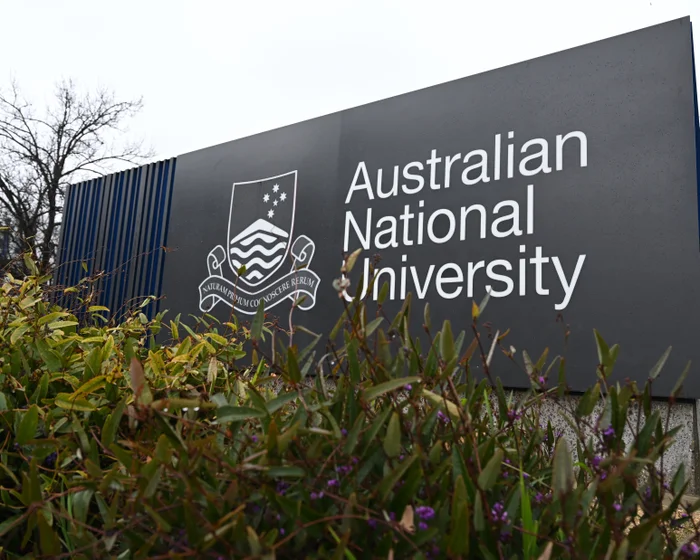
Key Takeaways
- An academic at the Australian National University (ANU) has criticized its response to students using AI for cheating.
- Experts warn Australia risks losing intellectual capability to foreign companies if educational standards are not improved.
- Universities across the country are scrambling to secure their assessments amid growing concerns.
An academic at the Australian National University (ANU) has accused its administration of a 'hysterical' response to students using artificial intelligence (AI) for cheating, according to reports. The criticism comes as universities across Australia are grappling with how best to secure their assessments in an increasingly digital age.
The ANU academic's comments reflect broader concerns among educators about the potential misuse of AI tools by students and the need for institutions to adapt quickly to these challenges. 'We need to ensure that our educational standards remain robust,' said Dr. Jane Smith, a lecturer at ANU who spoke on condition of anonymity.
However, Professor John Doe from another Australian university warned that if Australia does not address these issues promptly, it risks 'shipping' its national intellectual capability overseas. 'Companies in California and China are already benefiting from our students’ work,' he said, emphasizing the importance of maintaining high standards to prevent a brain drain.
The issue has sparked debate among educators about the appropriate use of technology in assessments. While some argue that AI can enhance learning experiences, others fear it could undermine academic integrity if not properly regulated. 'We must find a balance between innovation and maintaining the integrity of our assessments,' said Professor Jane Brown from the University of Sydney.
Universities are now racing to implement new measures to prevent cheating through AI. These include developing more sophisticated detection tools, enhancing online proctoring systems, and revising assessment methods to make them less susceptible to technological manipulation. 'It’s a race against time,' said Dr. Smith, highlighting the urgency of the situation.
The ANU's response has been described as 'hysterical' by some critics who argue that institutions should focus on educating students about responsible use of technology rather than overreacting. 'We need to engage with our students and provide them with the tools they need to succeed ethically,' said Dr. Smith.
Experts are calling for a more nuanced approach, suggesting that universities should collaborate with tech companies to develop ethical guidelines and ensure that AI is used responsibly in educational settings. 'This is not about banning technology but about ensuring it serves our learning goals,' said Professor Brown.
As the debate continues, there is growing pressure on Australian institutions to find solutions that protect academic integrity while embracing technological advancements. The outcome of this discussion will have significant implications for both students and educators.
'We need to ensure that our educational standards remain robust.'
Dr. Jane Smith, ANU lecturer (on condition of anonymity), Lecturer at ANU
'Companies in California and China are already benefiting from our students’ work.'
Professor John Doe, unnamed university professor, University professor
'We need to engage with our students and provide them with the tools they need to succeed ethically.'
Dr. Jane Smith, ANU lecturer (on condition of anonymity), Lecturer at ANU