Key Takeaways
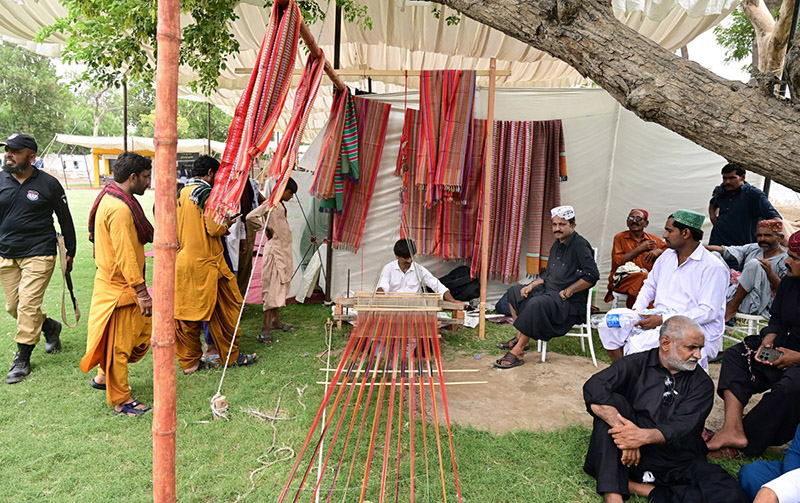
- A man weaves traditional colorful shawls on a pit loom during the closing ceremony of Hazrat Shah Abdul Latif Bhittai's 283rd Urs celebrations.
- The event took place under the shade of a tree, showcasing local craftsmanship and cultural heritage.
- This tradition continues to honor the memory of the revered Sufi saint.
A man is weaving traditional colorful shawls on a pit loom during the closing ceremony of Hazrat Shah Abdul Latif Bhittai's 283rd Urs celebrations. The event, held under the shade of a tree, highlights the continuation of local craftsmanship and cultural heritage.
The Urs festival commemorates the death anniversary of Sufi saints and is an important religious observance in Pakistan. This year marks the 283rd celebration of Hazrat Shah Abdul Latif Bhittai, who is revered for his contributions to literature and music.
Local artisans gather during these ceremonies to showcase their skills, often weaving intricate designs that reflect the rich cultural history of Sindh province. The pit loom, a traditional method of weaving, adds authenticity to the process, ensuring that age-old techniques are preserved.
The man, whose name is not provided in the sources, focuses intently on his work as he deftly manipulates the threads and shuttles. His dedication to maintaining this centuries-old tradition is evident in every intricate stitch of the shawl he creates.
Under the watchful gaze of fellow attendees, who have come from various parts of Sindh to participate in the Urs celebrations, the weaver continues his work. The colorful shawls, once completed, will be sold or given as gifts, serving both practical and symbolic purposes within the community.
The Urs festival is not just a religious observance but also an opportunity for cultural exchange and economic activity. Local vendors sell food, crafts, and other items, contributing to the local economy while preserving traditional practices.
This year's celebration underscores the enduring importance of such festivals in maintaining Pakistan’s rich cultural tapestry. The weaving of shawls during these ceremonies is a tangible link to the past, ensuring that future generations can appreciate and learn from their heritage.