Key Takeaways
- Chinese assets are gaining traction as a safe haven amid global market volatility.
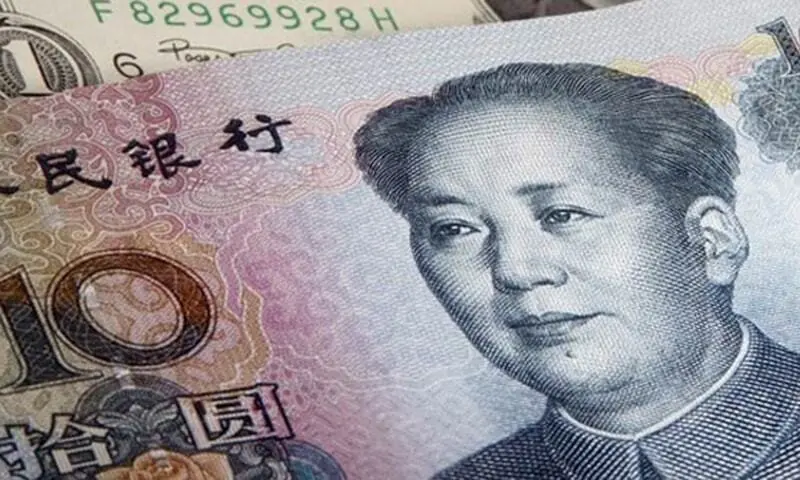
- The yuan has strengthened against the dollar, reflecting policy-driven stability.
- Investors see China as a diversification tool in their portfolios.
Chinese financial markets have seen a significant shift in investor sentiment, with assets becoming increasingly attractive despite global economic turbulence. This change is particularly evident in the bond market and certain stock sectors, where steady returns are being achieved through periods of geopolitical conflict and technological frenzy.
Christopher Hamilton, head of client investment solutions for Asia Pacific ex-Japan at Invesco, a firm managing over $2.2 trillion in assets, noted that China’s role in portfolios is evolving from a simple emerging-market growth allocation to a more nuanced source of diversification. He stated: 'Diversification is ultimately about combining exposures that respond differently to economic and market conditions, and China is increasingly being assessed through that lens.'
Since the Middle East conflict began at the end of February, China’s bond market has been the world's strongest, with the yuan being the only major currency to have climbed against the dollar. This strength has contributed to a significant rise in mainland blue-chip stocks, which logged an almost 11% first-half increase in dollar terms.
While this growth lagged behind the roughly 13% rise in the S&P 500 and the record 110% surge for South Korea’s KOSPI, it was achieved without relying on the same AI fervour or sensitivity to US interest rates that drove other markets. Liu Gongrun, executive deputy director at the CEIBS Lujiazui International Institute of Finance in Shanghai, explained: 'It means that when we allocate to and assess Chinese assets, it is no longer determined by short-term valuations, trading sentiment or changes in the Federal Reserve’s interest rates.'
China's relative insulation from global market forces reflects an economy out of sync with inflationary cycles elsewhere. The stock market is dominated by retail investors with different agendas than global fund managers. Regulators and state-backed investors have also promoted stability as a policy goal, supporting the yuan's gains. Kelvin Lam, senior economist at Pantheon Macroeconomics, noted: 'Yuan strength is sort of detached from traditional bog-standard long-run drivers like how the economy is doing. Instead, it is policy driven—the intention from the authorities to project currency stability at a time of global chaos.'
Foreign investors are now keying on China’s markets as a safe haven. Wee Khoon, a global asset manager, observed: 'There has been renewed demand for China bonds, which we believe was driven by relative safety and low volatility.' This shift in investor thinking is seen as a significant change from the past, when some had called Chinese assets 'uninvestable' only a few years ago.
The yuan's 5.4% advance against the dollar over the past year has come despite broad dollar strength and rock-bottom yields, reflecting strong exports and authorities’ encouragement of a slow, steady rise in the currency’s value. Global banks are revising up their year-end forecasts for gains beyond June’s three-and-a-half-year high of 6.7522 per dollar.
Analysts predict that the yuan will continue to strengthen, driven by policy goals and global market conditions. This trend is expected to attract more foreign investment into China's financial markets, making it a key player in global diversification strategies.
The role of China in portfolios is evolving from a simple emerging-market growth allocation toward a more nuanced source of diversification.
Christopher Hamilton, Head of client investment solutions for Asia Pacific ex-Japan at Invesco
'It means that when we allocate to, and assess, Chinese assets, it is no longer determined by short-term valuations, trading sentiment or changes in the Federal Reserve’s interest rates.'
Liu Gongrun, Executive deputy director at the CEIBS Lujiazui International Institute of Finance
'There has been renewed demand for China bonds, which we believe was driven by relative safety and low volatility.'
Wee Khoon, Global asset manager


