Key Takeaways
- Manchhar Lake has dried up due to lack of inflows from natural waterways and the MNVD.
- Fishermen are forced to rely on wastewater for a meager livelihood, catching fish that sell for Rs100-200 per kg.
- The lake’s ecosystem is severely impacted, with fewer migratory birds visiting in winter.
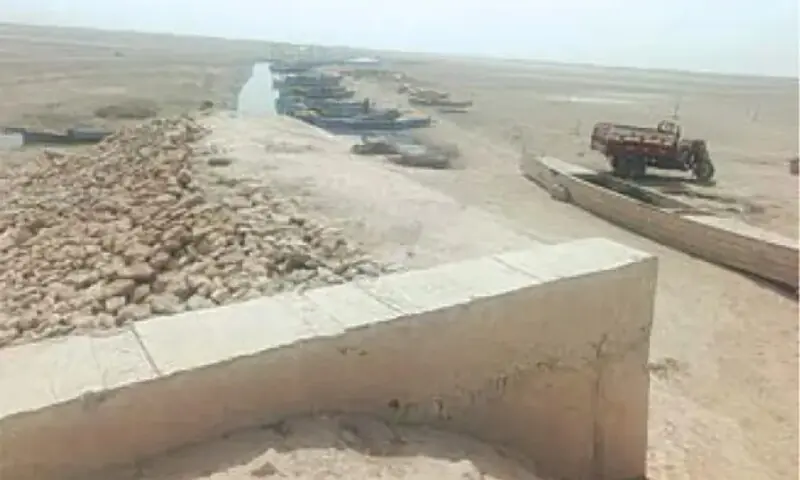
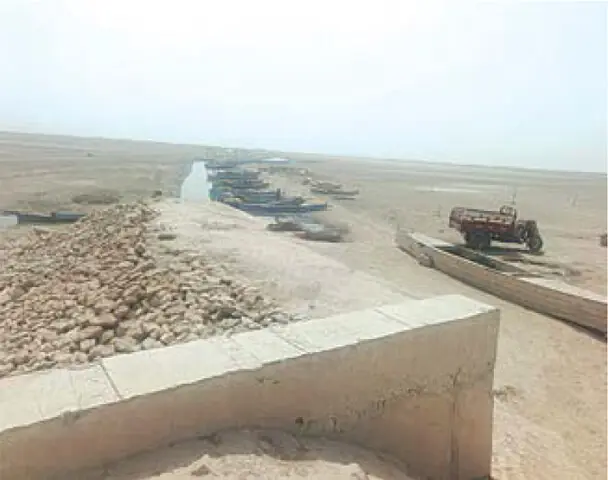
A view of Manchhar Lake from RD-62 on July 16 shows a significant portion of the sprawling lake bed has dried up this summer. The lake, once a major freshwater body and home to diverse ecosystems, now faces severe water scarcity due to reduced inflows from natural sources.
Elderly fisherman Maula Bux Mallah, who operates a small grocery shop at RD-62 on the lake’s embankment, laments the situation. He explains that the lake bed has remained dry for several months, with only a few areas still holding water. The usual sources of inflow — natural waterways and streams, as well as the Main Nara Valley Drain (MNVD) now known as Right Bank Outfall Drain-I (RBOD-I) — have provided little to no water this year.
According to Mr Bux, the wastewater brought by RBOD-I/MNVD allows fishermen to catch some fish. However, even this source of income is compromised due to ongoing rice transplantation in upstream districts of Sindh, which diverts the MNVD’s flow away from the lake. This has left the lake bed largely dry and deprived of its once-thriving economy and biodiversity.
The irrigation department reports that the lake’s level stands at 108.4ft, but Mr Bux insists it is no more than 105ft. Official records suggest that if the lake were to receive flows similar to those during the 2022 floods, its levels could rise to 123ft. Despite these potential improvements, the current state of the lake has forced fishing communities to migrate in search of livelihoods.
Manchhar Lake once received large flocks of migratory birds in winter; however, fewer now visit due to the drying up of the lake. The ecosystem has been severely impacted, with a decline in biodiversity and a loss of the lake’s once-thriving economy. The lake continues to receive wastewater from MNVD, which is built by Wapda and linked with Balochistan’s drainage project, RBOD-III.
Depending on water availability, the lake still irrigates agricultural land through its natural system. However, the ongoing challenges faced by the fishing communities highlight the urgent need for sustainable management of water resources in the region.
The lake bed has remained dry for several months. You can see it from other points along the embankment, where fishermen’s wooden boats now line the banks.
Maula Bux Mallah, Elderly fisherman
Fishermen are now catching the kind of fish that sells for Rs100 to Rs200 per kg — a means of subsistence for them nowadays.
Maula Bux Mallah, Elderly fisherman