Key Takeaways
- Pakistan renewed its call for dialogue amid tensions between Iran and the United States.
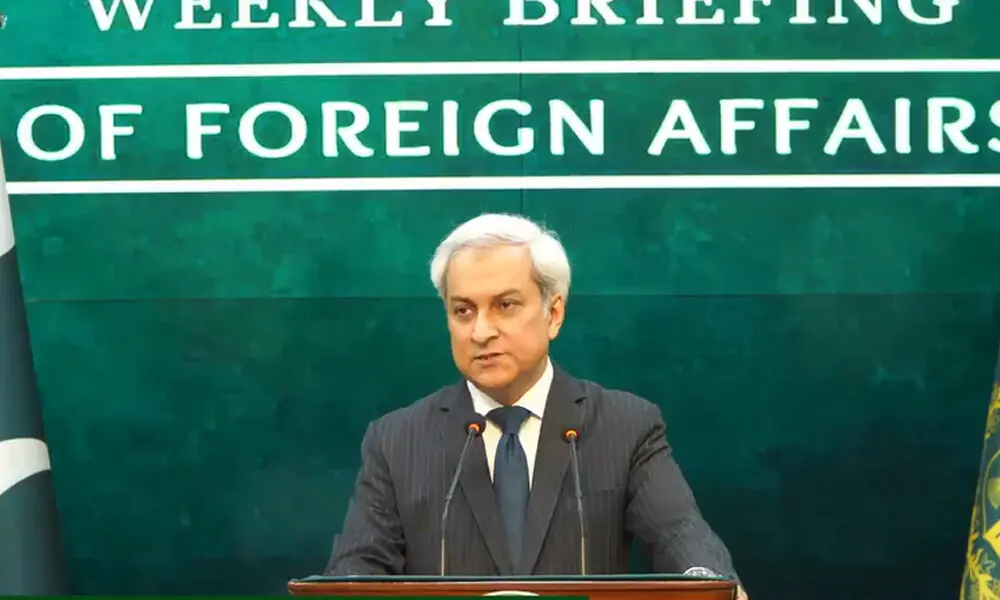
- The Foreign Office Spokesperson Tahir Andrabi warned that further escalation would undermine regional peace and stability.
- Pakistan hopes for an early normalisation of the situation in the Strait of Hormuz.
Pakistan on Thursday urged restraint and called for a revival of Iran-US talks, warning that any further escalation could harm regional peace and global energy supplies. Addressing his weekly press briefing in Islamabad, Foreign Office Spokesperson Tahir Andrabi reiterated Pakistan's position that sustained engagement, diplomacy, and dialogue are essential for lasting peace.
Andrabi stated, 'A renewed conflict serves no one’s interest,' echoing the country's deep concern over the recent hostilities. The latest round of attacks on July 8 by Iran, in response to U.S. strikes on three cargo ships transiting the Strait of Hormuz, marked a significant escalation since President Donald Trump declared an interim ceasefire with Iran to be 'over.'
The US military launched fresh strikes on Iran at President Trump's direction, targeting Bandar Abbas, Iran’s principal port city on the Strait of Hormuz. These actions sent global oil prices soaring and raised concerns about inflation in nations far from the conflict zone.
Pakistan acknowledged that implementing the Islamabad Memorandum of Understanding (MoU) was facing challenges but pledged to continue encouraging all sides to end violence and resume technical-level talks. Andrabi noted, 'Ultimately, all conflicts and disputes are resolved through dialogue at the negotiating table.'
The spokesperson also highlighted the impact on global energy supplies, trade, and food security, emphasizing Pakistan's hope for an early normalisation of the situation. He stressed the importance of ensuring the safety, security, and freedom of maritime navigation in the strategic waterway.
In a related development, Prime Minister Shehbaz Sharif held a telephone conversation with Qatar’s Emir Sheikh Tamim bin Hamad Al Thani on July 10, expressing concern over regional tensions and conveying Pakistan's solidarity with Qatar following recent attacks. The two leaders discussed efforts to de-escalate the situation.
Pakistan has remained actively engaged with key regional stakeholders in support of de-escalation and peaceful resolution efforts. Andrabi acknowledged that many countries, particularly those in the Global South, are being adversely affected by the situation in the Strait of Hormuz.
The Foreign Office Spokesperson reiterated Pakistan's commitment to the Islamabad MoU as an enduring framework for promoting peace, mutual respect, and shared prosperity among nations.
'A renewed conflict serves no one’s interest.'
Tahir Andrabi, Foreign Office Spokesperson
'Ultimately, all conflicts and disputes are resolved through dialogue at the negotiating table.'
Tahir Andrabi, Foreign Office Spokesperson