Key Takeaways
- Seventy-one percent of women in Pakistan approve of working outside the home.
- However, only 18% are actually employed, revealing a significant gap.
- Survey findings suggest community beliefs about approval are underestimated.
In Pakistan, despite significant progress in female education and urbanization, female labor force participation remains stubbornly low. A new study reveals that the key to understanding this puzzle lies not just in economic factors but also in societal perceptions.
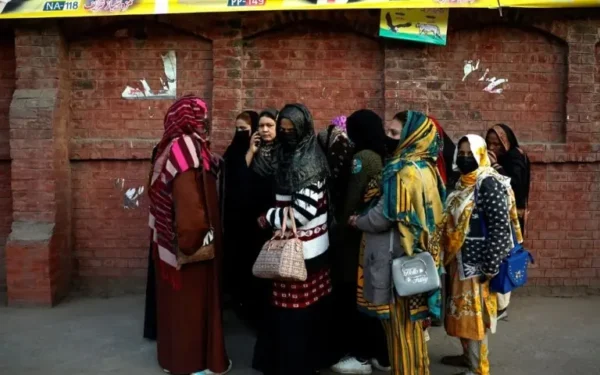
The research, conducted by a team of economists, surveyed over 8,000 men and women from low-income households in Faisalabad, Lahore, and Sialkot. The findings indicate that while 71% of women personally approve of working outside the home, only 18% are actually employed.
A critical factor identified by the study is the discrepancy between personal approval and perceived community support. On average, respondents underestimated men's support for women’s work modestly but significantly underreported women’s support by 14 percentage points.
This misperception creates a barrier to employment as individuals may refrain from seeking or accepting jobs due to fear of social disapproval. The study highlights that communities are more accepting than their members believe, suggesting a collective belief in lower approval levels than actually exists.
Dr. Aisha Khan, one of the lead researchers, explained: 'Our findings show that women’s employment is not just about economic incentives but also about societal norms and perceptions. People often act based on what they think others approve or disapprove.'
The implications of this study are profound for policymakers and social reformers in Pakistan. Addressing these hidden beliefs could lead to more effective strategies to increase female labor force participation.
Dr. Khan added: 'We need to work towards creating a more open dialogue about women’s roles in the workforce, ensuring that individuals feel supported regardless of their community’s perceived stance.'
The study also suggests that interventions aimed at changing public perceptions could have a significant impact on employment rates among women. By fostering greater awareness and understanding, policymakers can help bridge the gap between personal approval and actual participation.
While the findings are specific to Pakistan, they offer valuable insights into the broader challenge of aligning individual aspirations with societal norms in developing economies.
'Our findings show that women’s employment is not just about economic incentives but also about societal norms and perceptions.'
Dr. Aisha Khan, Lead researcher
'We need to work towards creating a more open dialogue about women’s roles in the workforce, ensuring that individuals feel supported regardless of their community’s perceived stance.'
Dr. Aisha Khan, Lead researcher