Key Takeaways
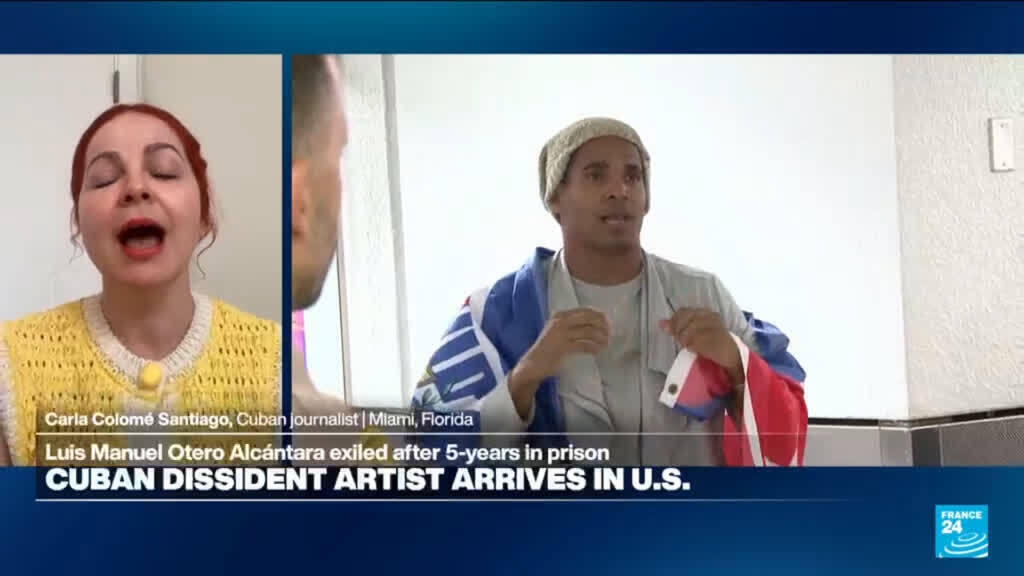
- Luis Manuel Otero Alcántara, a Cuban dissident artist, has arrived in Miami after five years in prison.
- He was arrested during anti-government protests in 2021 and sentenced to five years for public disorder and disrespect of national symbols.
- Otero Alcántara co-founded the San Isidro Movement, a collective that protests against the Cuban government.
Cuban dissident artist Luis Manuel Otero Alcántara has arrived in Miami following his release from prison and subsequent humanitarian parole granted by the United States. The artist, who was arrested during anti-government demonstrations in 2021, spent five years behind bars before being allowed to travel to the US.
Otero Alcántara co-founded the San Isidro Movement, a collective of Havana-based artists, writers, and musicians that has been vocal in its opposition to the Cuban government. His arrest came during one of Cuba's largest anti-government protests in decades, where he was charged with public disorder, contempt, and disrespect for national symbols.
The artist’s journey from prison to exile highlights the ongoing tensions between artistic freedom and political control in Cuba. Carla Colomé Santiago, a Cuban journalist based in Miami, commented on Otero Alcántara's situation: 'His release is a significant moment for both his personal freedom and the broader struggle for civil liberties in Cuba.'
Otero Alcántara’s case has garnered international attention, with Amnesty International designating him as a prisoner of conscience. His sentence was seen by many as part of the Cuban government's crackdown on dissent following the 2021 protests.
The artist's arrival in Miami marks a new chapter for both Otero Alcántara and his supporters. He is expected to continue his work as an artist and advocate, albeit from outside Cuba’s borders. His official Facebook page announced that he had been given permission to travel to the US on July 17th, 2026.
The circumstances surrounding Otero Alcántara's release have raised questions about the nature of political dissent in Cuba and the role of international pressure in securing his freedom. As he begins a new life in the United States, many hope that his presence will continue to shine a light on human rights issues within the country.
Otero Alcántara’s journey from prison to exile serves as a poignant reminder of the challenges faced by those who dare to challenge authority and advocate for change. His arrival in Miami is not just a personal triumph but also a symbol of resilience against oppression.