Key Takeaways
- Researchers at Penn State University have modeled the acoustic properties of the Liberty Bell.
- The bell hasn't been rung since 1846, when its distinctive crack was first reported.
- Historians are unsure when the bell developed its famous crack.
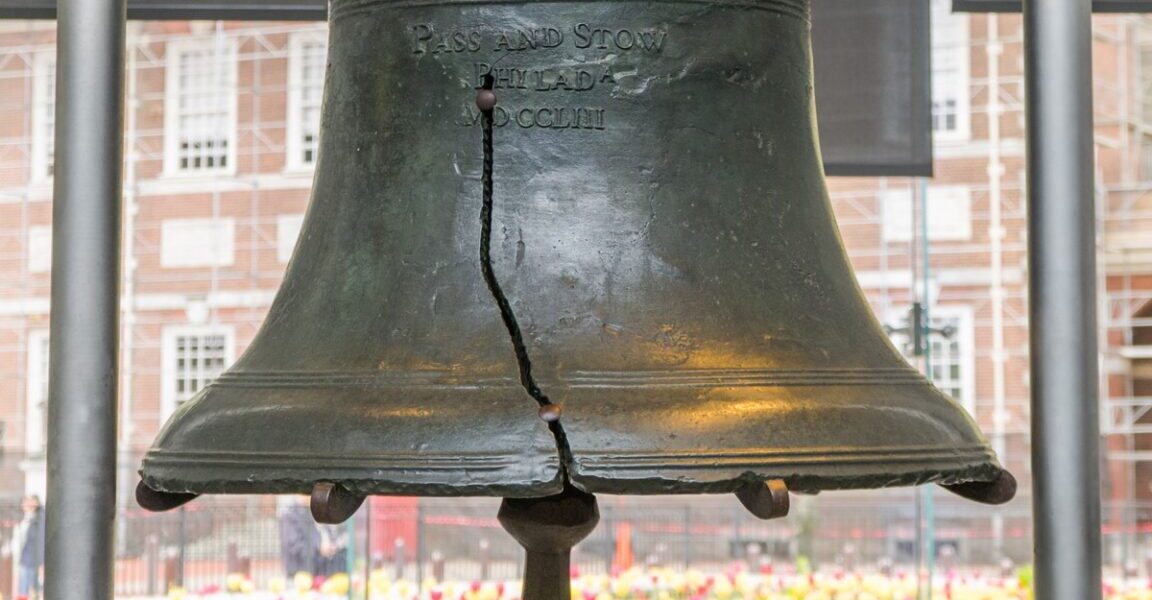
Scientists at Penn State University have undertaken a fascinating project to understand the sound of the Liberty Bell, which has not been heard since 1846. The bell, renowned for its famous crack, has been the subject of much historical speculation and scientific inquiry.
In honor of the nation's 250th anniversary, the researchers used data from a replica of the Liberty Bell to model its acoustic properties. This work was presented at a meeting of the Acoustical Society of America in Philadelphia earlier this year and later published in Physics Today.
The Liberty Bell's distinctive crack is believed to have occurred sometime between 1817 and 1846. An 1846 account in the Public Ledger described the bell's ringing on February 23 of that year, noting that the bell had developed a crack, which had been unsuccessfully repaired.
The bell's first crack, which occurred shortly after its arrival in Philadelphia in 1752, was so severe that it required two recasts by local foundry workers, John Pass and John Stow. The first recast produced a sound likened to coal scuttles banging together, leading to a second attempt.
Despite these efforts, the February 23, 1846, ringing extended the crack, rendering the bell 'irreparably cracked and forever dumb,' as described in the Public Ledger.
The researchers' work provides a unique insight into the bell's original sound, allowing historians and the public to better understand the historical significance of this iconic artifact.
While the exact date of the bell's first crack remains uncertain, the project highlights the ongoing interest in the Liberty Bell and its place in American history.
The study also underscores the importance of interdisciplinary research, combining historical records with modern scientific techniques to uncover the past.