Key Takeaways
- King Khalid International Airport in Riyadh partially resumed operations on Sunday.
- Houthi military spokesperson warned against using the airport, calling it a 'military target'.
- Flight tracking data showed little traffic at the airport despite the partial reopening.
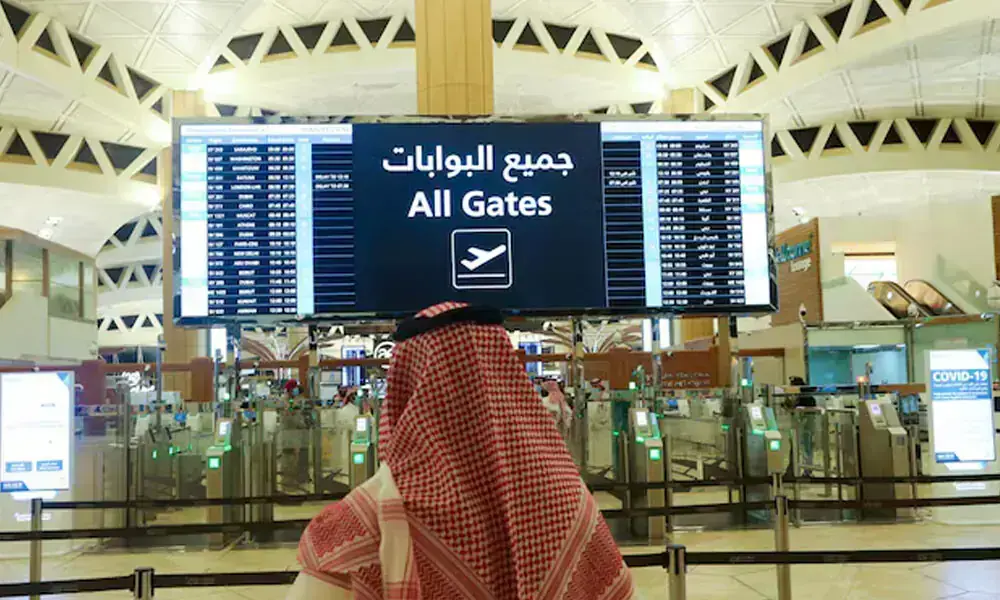
Saudi Arabia announced the partial resumption of operations at King Khalid International Airport in Riyadh on Sunday, despite renewed threats from Yemen’s Houthis. The airport's Terminal 1 was designated for domestic flights, while Terminal 2 was set for international flights operated by national carriers.
Houthi military spokesperson Yahya Saree renewed a warning to airlines, airport staff, and travelers, stating that the airport remained a 'military target' and would 'never be safe'.
Late on Saturday, the airport authorities announced that Terminal 1 would be operational for domestic flights and Terminal 2 for international flights operated by national carriers starting Sunday. However, flight tracking data from Flightradar24 showed minimal traffic at the airport on Sunday.
The airport had halted operations on October 10 following an attack claimed by the Houthis that killed 13 people and wounded more than 300, the deadliest in the kingdom in over a decade. The Saudi-led coalition reported that the Houthis had carried out 20 attacks on King Khalid International Airport between October 1 and 11.
Saudi civil defence authorities issued emergency alerts for Riyadh and several southern cities, including Abha, Khamis Mushait, Jazan, and Najran, on Sunday. The coalition later said it intercepted 10 ballistic missiles fired towards southern Saudi Arabia.
The conflict has become an increasingly destabilizing element in the US-Israeli offensive against Iran, with Saudi Arabia serving as a pressure point in the wider war. The renewed fighting in Yemen has shattered a UN-brokered truce that had largely held since 2022.
Saudi Arabia has stepped up its strikes against the Houthis after the group seized strategic territory along the Red Sea coast last month, closing in on the Bab el-Mandeb Strait – a global maritime chokepoint and shipping route for Gulf oil producers on the opposite side of the Arabian Peninsula to the Strait of Hormuz.
The partial reopening of the airport comes as the kingdom continues to face daily attacks from the Houthis, despite Saudi-led coalition strikes against the group. The airport's partial resumption of operations is a sign of the kingdom's determination to maintain its critical infrastructure despite ongoing threats.