Key Takeaways
- Samsung Electronics unveiled V10 Bonding V-NAND, a 400-layer memory prototype.
- The new technology offers 58% higher density and improved performance for AI systems.
- Samsung also showcased zHBM and zNAND-O concepts to boost next-generation memory efficiency.
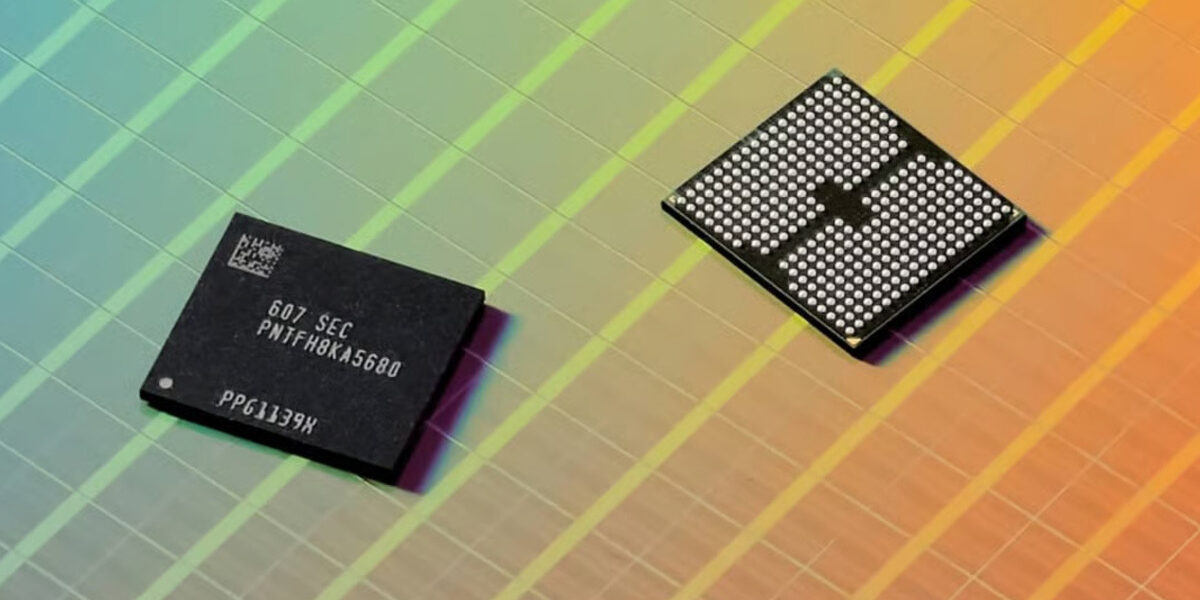
Samsung Electronics has introduced an advanced artificial intelligence (AI) memory technology, the V10 Bonding V-NAND or BV-NAND, at this year’s Future of Memory and Storage conference in Santa Clara, California. This new prototype features more than 400 layers and utilizes a novel wafer-bonding architecture to significantly increase storage density and performance.
According to Samsung, the BV-NAND technology provides about 58% greater memory density compared to its previous V9 NAND model. The company asserts that these upgrades are designed to support AI systems requiring higher-capacity and more power-efficient storage solutions.
The demand for high-capacity NAND memory has surged as AI workloads have expanded beyond training large language models to generating answers for users. NAND flash memory is crucial in devices such as smartphones, storing data like photos, videos, and applications.
Samsung also demonstrated concept models of zHBM (zHigh-Bandwidth Memory) and zNAND-O architectures, which are part of its vision for next-generation 3D memory technology. These innovations stack memory cells vertically to store more data efficiently.
Conventional high-bandwidth memory is placed beside AI processors, but Samsung’s zHBM places memory vertically above AI accelerators, reducing the distance that data must travel and increasing bandwidth while improving energy efficiency.
Samsung claims its wafer-bonding technology could provide over 10 times the memory density of conventional HBM5 memory. The company also expects this technology to triple energy efficiency and reduce thermal resistance by more than half.
Despite concerns about weakening demand from Chinese smartphone manufacturers, analysts continue to highlight strong AI sector demand. Samsung has noted that long-term customer agreements could eventually represent 60% to 70% of its memory sales.
Citi analysts reported in a recent note that inventories across the DRAM and NAND supply chains remain well below historical levels, indicating continued robust demand despite market concerns.