Key Takeaways
- Fewer than 400 true Eriskay ponies remain.
- The community on the island fights to protect the rare breed.
- Eriskay ponies are one of the world's rarest native pony breeds.
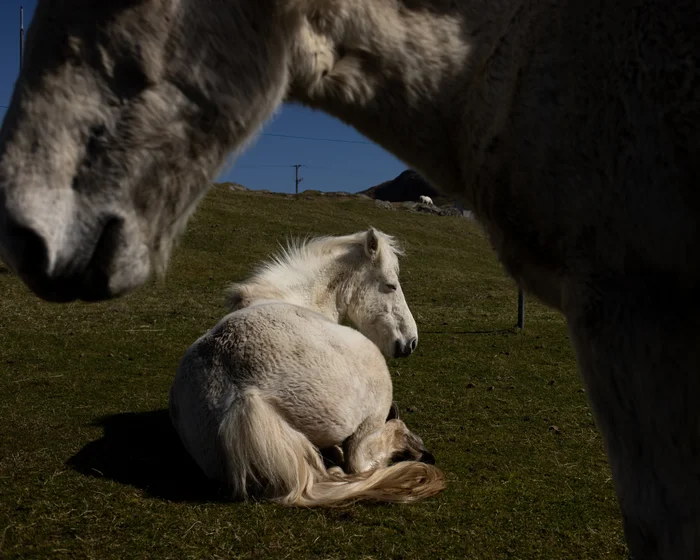
Eriskay ponies, one of the world's rarest native breeds, face a critical situation with fewer than 400 true ponies remaining. These ponies, known for their unique white and grey coloring, are a significant part of the cultural heritage of the Outer Hebrides, particularly on the island of Eriskay.
The community on the island is actively involved in their preservation. The ponies are not just a part of the landscape but also a part of daily life, freely roaming the village and being cared for by the townsfolk.
However, their numbers are threatened by crossbreeding with other pony breeds, which has led to a false impression of higher population numbers. Only about 300 to 400 true Eriskay ponies are thought to remain, making their conservation efforts crucial.
The plight of the Eriskay ponies is unique because the community on the island is fighting to protect them. The ponies are not just a symbol of the region's history but also a source of pride and identity for the local people.
Efforts to preserve the Eriskay ponies include community-led initiatives and breeding programs aimed at maintaining the purity of the breed. The community's commitment to the ponies is evident in their daily care and protection.
The Eriskay pony's rarity is due to its unique characteristics and the limited number of true ponies. Their survival is not only a matter of preserving a breed but also of maintaining the cultural heritage of the Outer Hebrides.
The community's efforts to protect the Eriskay ponies are ongoing, with a focus on breeding and conservation. Their struggle highlights the importance of community involvement in the preservation of endangered species.
The Eriskay ponies are a testament to the resilience of a community that values its heritage and is willing to fight for its preservation. Their story is a reminder of the importance of biodiversity and the need for continued conservation efforts.