Key Takeaways
- China's blue-chip index dropped more than 2% to a 1-year low.
- US moves toward restricting Chinese-made components in AI data centres hit tech shares.
- US-China trade truce extended but economic and trade issues remain unresolved.
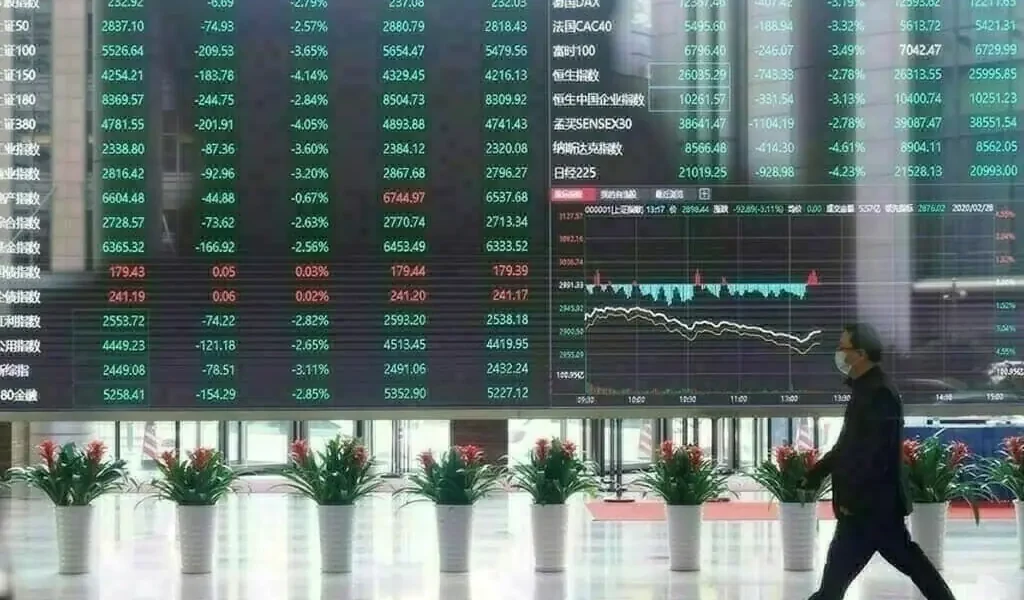
China's blue-chip index slipped more than 2% to a 1-year low on Monday, reflecting a decline in investor confidence following the US-China summit. The large-cap CSI300 Index lost 2.2% by the lunch break, marking its worst showing in five weeks and touching its lowest point since early September 2025.
The Shanghai Composite Index declined 1.7%, while stocks in Hong Kong rose 0.6%, where the market will remain open during China's Golden Week holiday.
Despite the positive optics of the leadership summit, the US and China remain divided on key issues such as technology, security, trade, and international governance, according to OCBC Bank.
A bipartisan group of US lawmakers introduced legislation to bar the federal government from equipping sensitive systems with Chinese-made components used in AI data centres, further dampening investor sentiment. This news weighed on Chinese makers of optical transceivers, with Eoptolink Technology and Innolight Technology shares slumping 7% and 9% respectively.
The CSI 300 Telecommunication Services Index slumped more than 6% to a two-month low, highlighting the broader impact on the tech sector. The decline in technology shares was led by China's tech-focused STAR Market, ChiNext, and the small-cap CSI3000 Index, each falling roughly 4%.
Sentiment was further weighed down by data showing China's industrial profit growth slowed in August, indicating deepening economic imbalances. Thin trading volumes suggested investors were reducing risk ahead of China's week-long National Day holiday.
Xiangcai Securities noted that 'risk aversion mood is permeating ahead of the long holiday, and trading will likely be thin' during the shortened trading week. Investors also face a busy calendar of US inflation, jobs, and GDP data during the break, adding to uncertainty.
The US-China trade truce was extended for two months, providing space for both sides to evaluate the implementation of their arrangement to resolve economic and trade issues. However, the extension did little to alleviate concerns among investors.