Landmines and explosive remnants of war are causing a sharp rise in casualties across Syria, with 1,602 people killed or injured in 2025 alone. This represents an increase of more than 50% over the previous year, according to a Landmine Monitor report published by the International Campaign to Ban Landmines on Tuesday. Only Myanmar, with 1,891 casualties, recorded more.
The surge in incidents is attributed in part to the large-scale return of refugees and internally displaced people following the overthrow of Bashar al-Assad. Katrin Atkins, research lead at Landmine Monitor, told the BBC, "When you look at population movement, a couple of months later you see an increase of incidents in these areas, because that's exactly where people go and start to use the fields again."
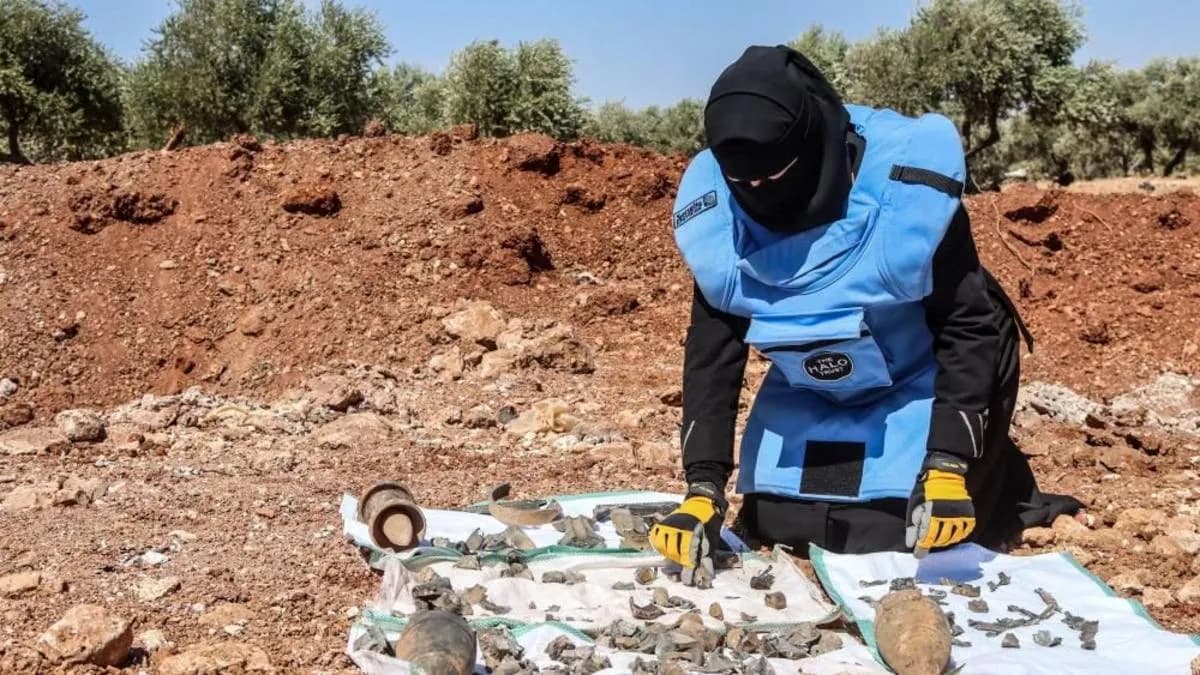
The danger is particularly acute for those engaged in farming, agriculture, or shepherding. Simon Jackson, the Syria programme manager for the Halo Trust, stated that more than 60% of casualties recorded by the charity involve these activities. Jackson told the BBC, "They're not going to wait for the government or for organisations like us to come and tell them that everything is safe and clear," adding, "People are taking risks out of desperation."
The human cost is devastating. On Sunday, 11-year-old Alaa was killed and her 10-year-old brother, Mahmoud, was seriously injured when they triggered a landmine while tending goats in Umm Khuzaym. Alaa's father, Walid Mohammed Al-Ghafar, told the BBC, "Then we heard people screaming," after running outside to find his daughter lying face down. Al-Ghafar noted that demining teams had visited the fields several times, leading the residents to believe the area was safe.
Since the fall of Assad on 8 December 2024, the UN Mine Action Service (Unmas) has recorded at least 1,556 incidents involving explosive ordnance, resulting in 2,701 casualties: 935 killed and 1,766 injured. Children account for 995 of those victims, or about 37%. However, experts estimate that overall casualties could be under-reported by 25-50%.
The threat has persisted into November, with at least 20 people killed and more than 40 injured. On 4 November, an explosion in a school courtyard in Hasakah killed a 12-year-old and injured 19 others. On Monday, a 13-year-old boy was killed in southern Daraa province when an unexploded cluster munition detonated.
The presence of explosives is also hindering Syria's economic recovery, as contaminated farmland cannot be safely cultivated and scrap metal collection remains dangerous. While the Syrian Ministry of Defence says its teams have dealt with more than 315,000 mines and unexploded munitions since the end of 2024, no nationwide survey exists to establish the extent of the contamination. Atkins told the BBC, "Remnants of war from today's conflicts are often very widely and broadly scattered, often without patterns, which makes it extremely difficult to do clearance," concluding, "We're in a bit of a black hole."