Residents in Batam, Indonesia, are protesting severe water shortages that have made basic tasks like cooking and bathing difficult. The community has directed its anger at the rapid expansion of data centres, which are being built to power the global artificial intelligence boom.
The local water utility operator, Air Batam Hilir (ABH), told AFP that the area has suffered a "long drought" caused by low rainfall, with a strong El Nino cycle worsening the dry weather. However, residents in the district believe "that the water shortages... are related to the construction of data centres," said 54-year-old tradesman Juniardi Adinda Sembiring Gurukinayan.
Gurukinayan noted that while the initial reaction to the industry coming to Batam was "thank God industry is coming," recent outages have been severe enough that he "sometimes I skipped my shower." He stated, "We cannot eat rice without water. We cannot cook vegetables without water."
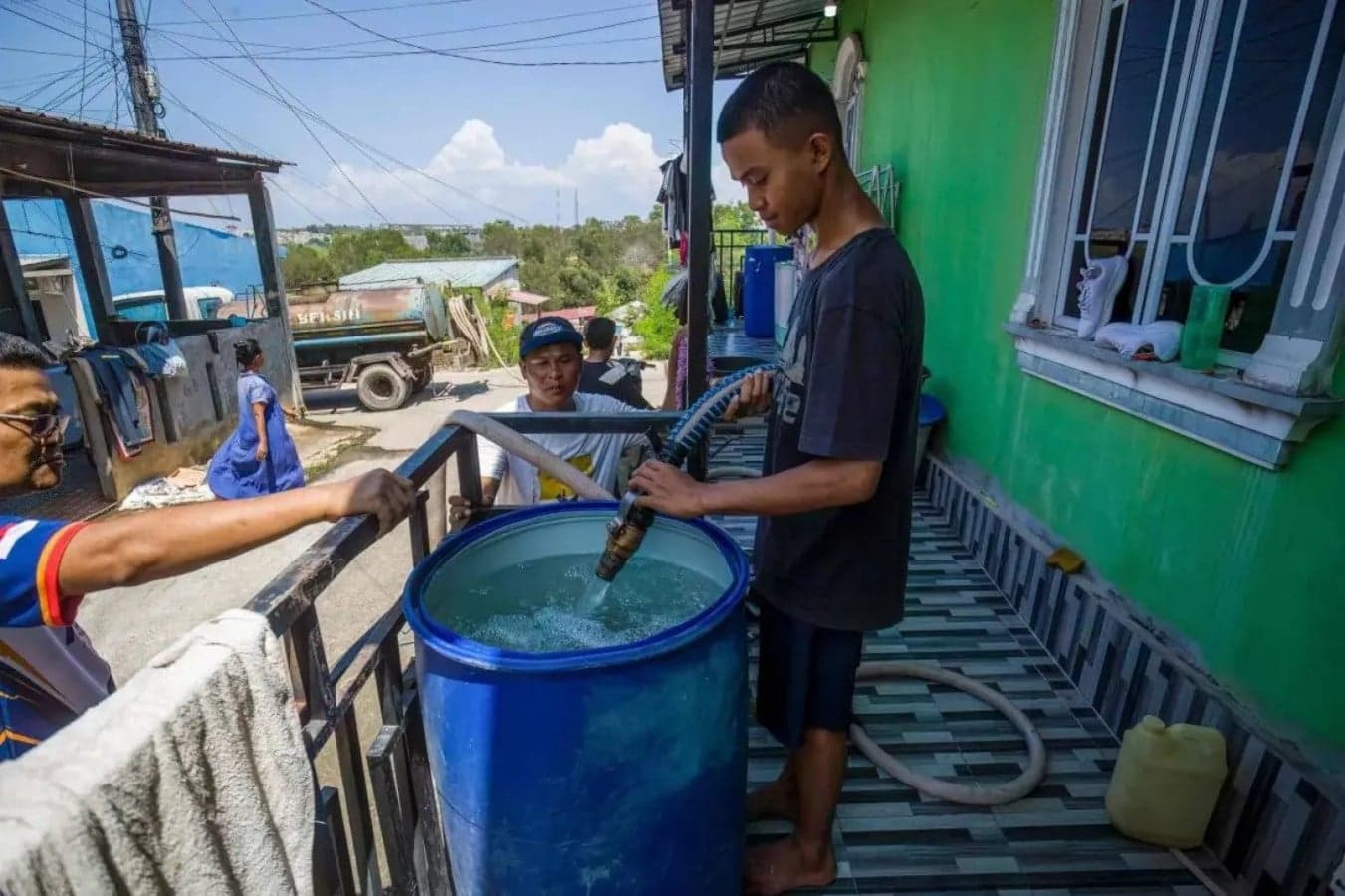
The frustration led to spontaneous protests outside Nongsa Digital Park, a special economic zone and new cluster for data centres. At one protest last month, AFP observed a police officer filling buckets for residents. In the nearby coastal village of Mata Ikan, demonstrator Rahmat reported that people had to use seawater to wash after defecating.
Sulastri, 38, reported that the water crisis has worsened over the last six months. She noted that she had to pour water from a plastic bottle to wash dishes and that small stall owners can no longer make ice cubes. She described the water distributed from government tanks as "smelly" and "yellowish."
Ginda Alamsyah, a spokesman for ABH, stated that the drought caused the nearby Nongsa Reservoir to run very low and that supply systems were further disrupted by an electrical fault. He noted that the tech park receives water from a different source, the Duriangkang Reservoir.
In late September, authorities told developers they must build plants to desalinate seawater for cooling to avoid straining local resources. Companies involved in the Nongsa Digital Park include BW Digital, DayOne, and Princeton Digital Group. Gaw Capital Partners, another owner, stated it was "aware of the distress and frustration expressed by local residents in Nongsa and surrounding Batam communities" and said its facilities must deploy "closed-loop" water systems to reuse resources.
Batam mayor and head of BP Batam, Amsakar Achmad, told local media in October that recent disruptions "was not caused by data centres or AI or investors entering that sector," attributing the decline instead to "weather and climate factors."
The expansion of data centres in the region began as Singapore halted new developments between 2019 and 2022 due to resource constraints. A KPMG report projects that data centre capacity in Southeast Asia will triple from 2025 levels by 2030.
In Malaysia, the deputy prime minister told parliament in July that data centres are forecast to swallow up one-third of the country's total energy consumption by 2035. In Johor, data centre capacity has ballooned by a factor of 200 to 2.1 gigawatts today, according to researcher James Chai of the ISEAS-Yusof Ishak Institute.
While some regions face pushback, others see potential. Mohd Fadhil Md Din of Malaysia's University of Technology told AFP that Johor has the potential to be a leading sustainable hub if it manages resources carefully. In Kota Damansara, a developer withdrew a data centre application in August following a petition of more than 9,000 signatures from neighbors concerned about noise and water usage.