Key Takeaways
- The KSE-100 Index fell by nearly 500 points at the Pakistan Stock Exchange (PSX) in early trading.
- Key sectors such as automobile assemblers and commercial banks experienced selling pressure.
- US Exim Bank discussed potential financing for Boeing aircraft for privatised PIA, but no loan or guarantee was announced.
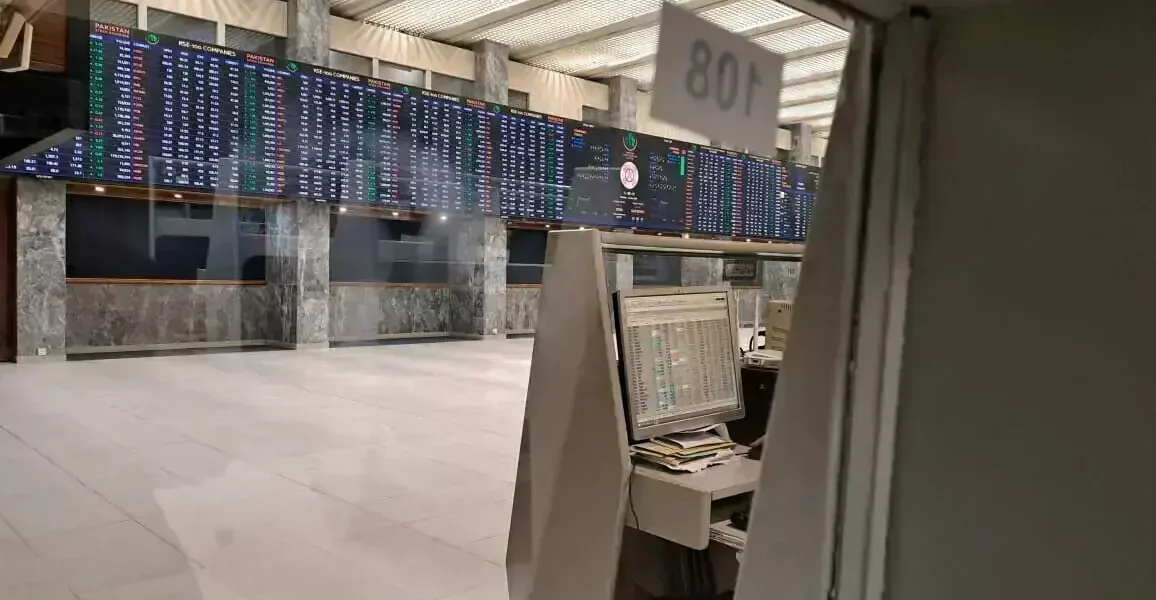
The Pakistan Stock Exchange (PSX) witnessed a significant drop in the KSE-100 Index on Monday, with the benchmark index shedding nearly 500 points during the opening minutes of trading.
At 10:15am, the KSE-100 Index was trading at 170,299.24, down 465.98 points or 0.27% from the previous day’s close of 170,765.22 points.
Sectors such as automobile assemblers, cement, commercial banks, fertiliser, oil and gas exploration companies, and OMCs saw selling pressure, with index-heavy stocks like HUBCO, MARI, OGDC, PPL, PSO, and HBL trading in the red.
Adviser to the Finance Minister Khurram Schehzad stated that Pakistan had discussed potential financing from the US Export-Import Bank (US Exim Bank) for Boeing aircraft for privatised Pakistan International Airlines (PIA), but no government loan or sovereign guarantee had been announced for the airline.
During the previous week, the PSX remained cautious and range-bound, constrained by persistent geopolitical uncertainty and shifting domestic political developments, which dampened investor risk appetite.
Internationally, share markets were mostly lower on Monday, with oil prices rising amid doubts about a truce between the United States and Iran.
US President Donald Trump rejected an Iranian proposal to reopen the Strait of Hormuz, claiming Tehran was desperate to make a deal. Trump stated that talks would continue this week, but Iran showed no sign of backing down.
A dearth of refining capacity has led to all-time high diesel prices, raising inflation risks and impacting wage decisions.
Central banks, including the Reserve Bank of Australia, are expected to raise interest rates, with the Federal Reserve likely to hike for a second straight meeting in October, tightening rates by around 90 basis points to late next year.