Key Takeaways
- Prime Minister Shehbaz Sharif calls for early work on ML-1 railway upgrade.
- ADB and Pakistan discuss infrastructure and development priorities.
- ML-1 modernisation seen as key to regional trade and industrial initiatives.
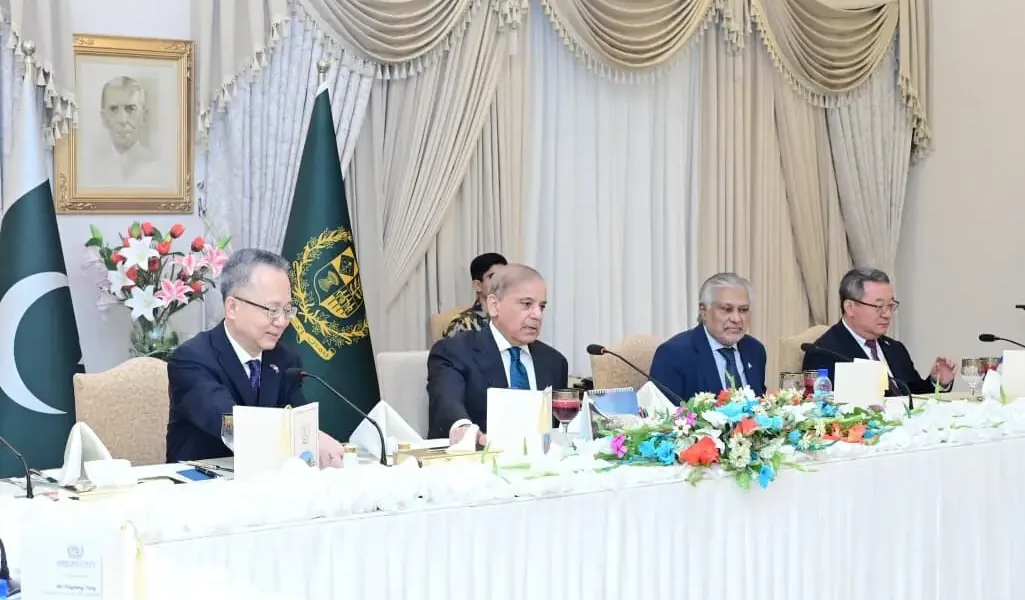
Prime Minister Shehbaz Sharif has called for an early start to the upgrade of Pakistan’s Main Line-1 (ML-1) railway, during a meeting with ADB Vice President Yingming Yang. The discussions focused on the modernisation of the ML-1 railway corridor, which stretches from Karachi to Peshawar, passing through major cities like Lahore and Rawalpindi.
PM Sharif highlighted the importance of upgrading ML-1 for modernising freight logistics, strengthening regional trade connectivity, and supporting major industrial initiatives. The project is a key component of the China-Pakistan Economic Corridor (CPEC).
The meeting also reviewed the multi-decade development partnership and charted priority interventions under the new Country Partnership Strategy (CPS) 2026–2030. The PMO statement noted that Pakistan has successfully navigated a difficult economic turnaround through rigorous fiscal, structural, and governance reforms, restoring macroeconomic stability and earning stable outlook upgrades from major international credit rating agencies.
The discussions covered collaborative avenues in support of the private sector, energy security, food security, enhancing support for export competitiveness, and Artificial Intelligence and Information Technology. The PM stressed the government’s commitment to dismantling administrative bottlenecks through dedicated execution task forces.
The meeting concluded with a mutual pledge to translate the strategic priorities of the CPS 2026–2030 into concrete, high-impact results that drive sustainable growth and visibly enhance the standard of living for the people of Pakistan.
The ML-1 railway project aims to upgrade Pakistan Railways’ existing Main Line-1, which stretches 1,733 km from Karachi to Peshawar, passing through cities like Kotri, Hyderabad, Rohri, Multan, Lahore, and Rawalpindi. The project is a vital component of the China-Pakistan Economic Corridor (CPEC).
The discussions also explored collaborative avenues in support of the private sector, energy security, food security, enhancing support for export competitiveness, and Artificial Intelligence and Information Technology. The PM stressed the government’s commitment to dismantling administrative bottlenecks through dedicated execution task forces.