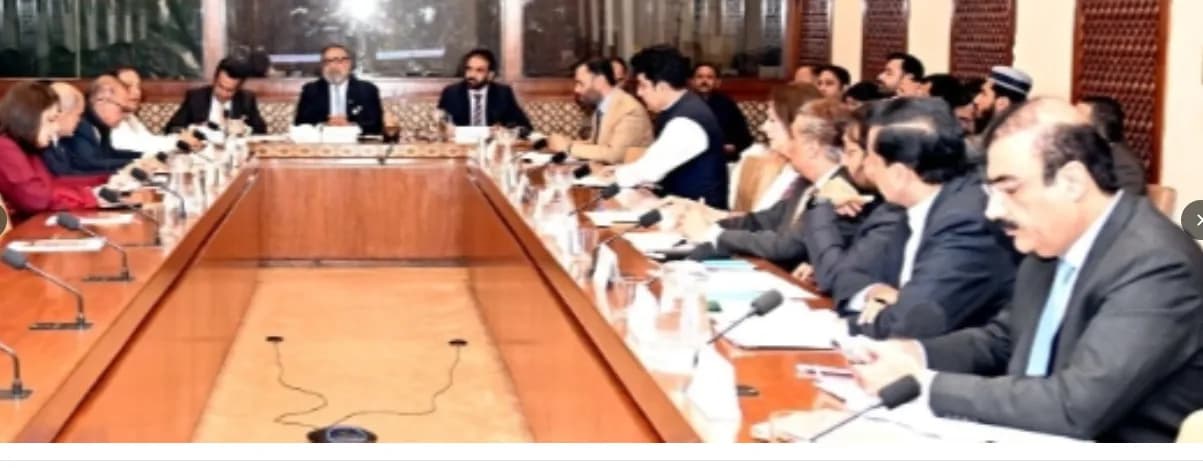
A Senate panel on Monday addressed complaints from tobacco growers in Khyber Pakhtunkhwa regarding heavy taxation, alleged exploitation by cigarette manufacturers, and the failure of the Pakistan Tobacco Board (PTB) to enforce marketing regulations. The panel, led by Senator Aimal Wali Khan, directed relevant government departments to provide detailed explanations at its next meeting.
Tobacco growers from Swabi, Mardan, Buner, and Charsadda, alongside industry and exporter representatives, presented concerns regarding pricing, procurement quotas, and company practices. The growers demanded that tobacco be formally declared an agricultural crop to receive incentives and facilities similar to other crops. They also called for a rationalized tax regime, arguing the current burden has undermined Pakistani tobacco's competitiveness in international markets.
Zahid Khan, representing the tobacco industry, informed the committee that taxation and levies on tobacco total Rs438.072 per kg. This includes a Federal Excise Duty (FED) of Rs390, a Federal Tobacco Cess of Rs18.47, and a Provincial Tobacco Cess of Rs35.25. Khan argued these taxes make Pakistani growers and exporters less competitive against those in India and Bangladesh.
Growers and industry representatives also criticized what they described as excessive inspections by the Federal Board of Revenue (FBR) on tobacco transportation. The FBR clarified that no tax or duty is imposed on tobacco exports, and that advance tax applies only where GLT-threshed tobacco processed for export-quality standards is consumed domestically. The FBR stated this advance tax is refundable upon export.
Senator Aimal Wali Khan expressed concern over the complicated refund mechanism and directed the FBR to provide comprehensive details of tobacco exports, refunds issued, and pending claims from the last five years. He also ordered the FBR to simplify the refund procedure to facilitate exporters.
The committee examined complaints regarding the exploitation of growers by multinational manufacturers, including Pakistan Tobacco Company (PTC) and Philip Morris International (PMI), as well as local companies. Growers alleged that companies offer low prices for produce despite substantial profits. In Buner, growers reported that only one company purchased its allocated quota, while 13 companies allegedly failed to make purchases, potentially leaving cultivators vulnerable to price manipulation. The Convener directed the PTB to take appropriate action.
Growers accused the PTB of failing to enforce mandatory marketing regulations under MLO 487, identifying 12 areas of concern, including violations of the Minimum Indicative Price (MIP), non-compliance with prescribed grading standards, failure to execute purchase agreements and delays in payments. They alleged that, with the exception of PTC and PMI, other companies failed to issue agreements for targeted procurement by the December 31 deadline. They also questioned the PTB’s failure to constitute growers’ committees for scrutiny.
Another major grievance involved delayed payments. While payments are required within seven to 30 days of purchase, the association alleged that payments for the 2025 season remain outstanding for many growers. Growers also complained that purchasing depots closed before companies fulfilled procurement requirements, leaving tobacco unsold.
The committee also discussed concerns regarding the Provincial Development Cess, with growers questioning why funds were used in other districts instead of tobacco-producing areas. The Convener also questioned why a tobacco expo was held in Karachi instead of in Khyber Pakhtunkhwa.
Tobacco exporters highlighted that the Rs390 per kg advance tax creates liquidity problems. The growers’ association further alleged that illegal tobacco trading and smuggling cause an annual tax revenue loss of approximately Rs300 billion, with illegal cigarette production reaching around 40 to 45 million sticks.
The Chairman of the PTB briefed the committee on a digitised dashboard aimed at improving transparency and proposed moving toward a market-based system. The Agriculture Department of Khyber Pakhtunkhwa supported the proposed change to recognize tobacco as an agricultural crop, stating it would encourage research and improve quality.
Senator Aimal Wali Khan reaffirmed the committee’s commitment to a fair and transparent framework. Officials from the Ministry of National Food Security and Research, the FBR, and the PTB have been directed to furnish comprehensive replies to the questions raised by the Convener at the next sitting.