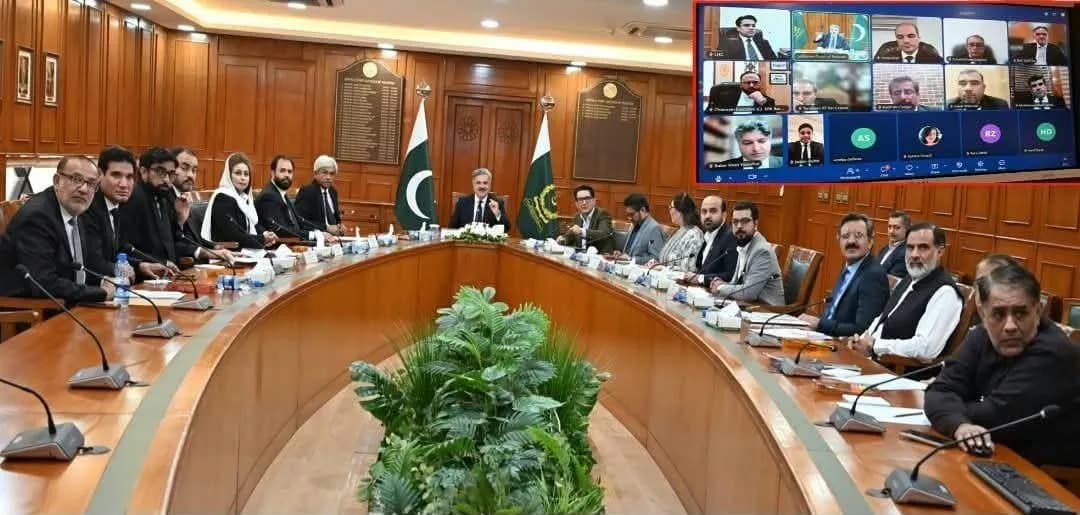
Chief Justice of Pakistan Justice Yahya Afridi, acting as Chairman of the Law and Justice Commission of Pakistan (LJCP), reviewed the progress of establishing Women Facilitation Centres during a meeting at the Supreme Court on Thursday, November 12, 2026. The initial phase of the project plans for four centres to be built, with one located in each province.
Justice Afridi stated that judicial facilitation priorities for 2025-26 have focused on providing clean drinking water, e-libraries with internet, women-centric facilities, and uninterrupted electricity to courts and bar associations across Pakistan, including Islamabad. He noted that these facilities have already been provided.
The Chief Justice identified the establishment of dedicated Women Facilitation Centres in all four provinces and Islamabad as a priority for 2026-27. These proposed centres are intended to function as one-window facilities to provide women with guidance and support in a safe and accessible environment. The planned facilities will include:
Reception and guidance desks
Waiting areas and hygienic washrooms
Private consultation rooms
Legal assistance
Spaces for mediation and alternative dispute resolution
Psychosocial support and referral services
Accessible entrances and ramps for women with disabilities
Suitable spaces for interaction with children where required
The meeting was informed that an All-Pakistan design competition was held under the Institute of Architects Pakistan (IAP). The three winning designs were shared with all High Courts to help with implementation based on local requirements. Officials reported that consultations with the relevant High Courts are finished and space has been identified for the first four centres.
Justice Afridi directed the National Engineering Services Pakistan (NESPAK) to begin work on establishing the centres. NESPAK and the IAP Islamabad-Rawalpindi Chapter will coordinate the design and implementation process with the relevant High Courts to ensure the work is completed on time. The initiative is intended to address practical barriers women face when accessing the justice system, such as difficulties navigating court procedures, obtaining legal advice, and finding private consultation facilities.