Key Takeaways
- The government plans to set up 3,000 public EV charging stations by 2030.
- Initial phase includes 40 fast-charging stations on motorways and N-5.
- Incentives for private investors to install charging units are being offered.
Pakistan is set to significantly boost its electric vehicle (EV) infrastructure, with plans to install around 3,000 public charging stations by 2030, according to a written reply from the Ministry of Industries and Production to the National Assembly.
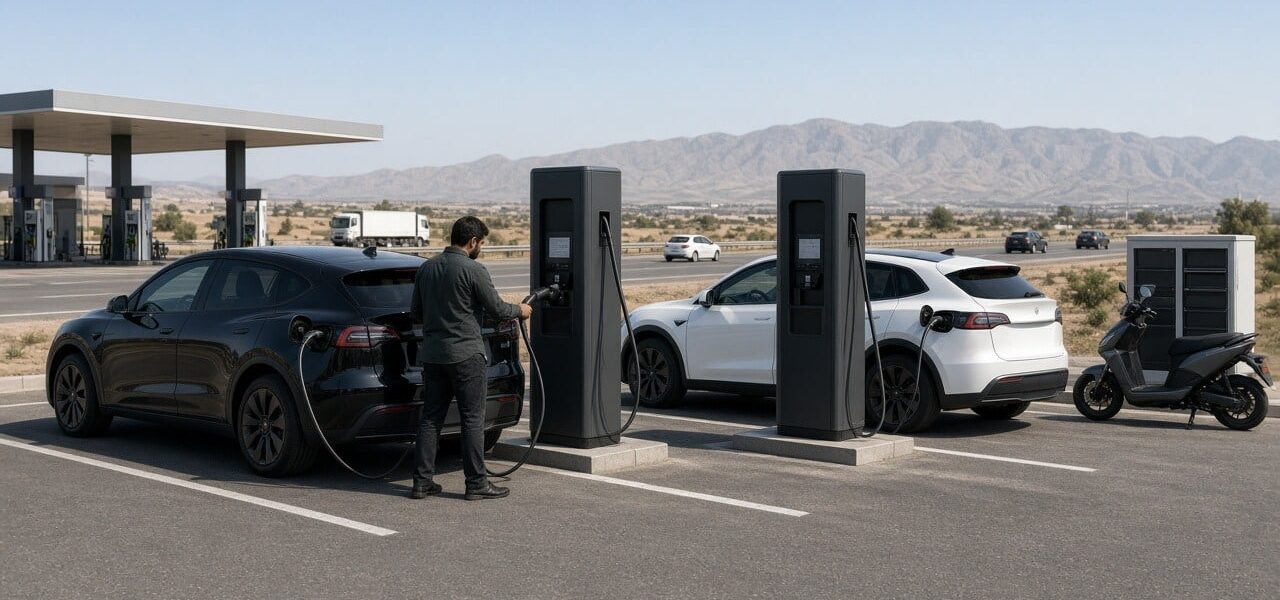
The initial phase of this ambitious plan involves the installation of 40 fast-charging stations along major motorways and selected sections of the National Highway (N-5).
These charging points will be strategically placed at intervals of approximately 50 kilometers to support the growing demand for electric transport.
Some progress has already been made, with a major motorway recently receiving ultrafast EV charging stations, indicating the government's commitment to this initiative.
To encourage private investment, the government is offering a dedicated commercial electricity tariff for charging stations and faster electricity connections. Public-private partnerships, including viability gap funding arrangements, are also part of the plan.
The policy also aims to expand fast-charging, Level 2, and Level 1 facilities, with battery-swapping stations planned for electric two-wheelers and three-wheelers.
Incentives for private investors have already shown promising results, with 3,800 investors expressing interest in setting up EV charging stations across the country last year.
The government is also focusing on the collection, transportation, reuse, dismantling, and recycling of end-of-life EV batteries, particularly lithium-ion batteries, through a regulatory framework and a nationwide network of battery collection and recycling facilities.