
Key Takeaways
- Pakistan’s first astronaut will embark on a space mission from China’s space centre on November 25.
- The mission aims to inspire the next generation and promote scientific awareness.
- Plans include establishing Pakistan’s first Space Museum at the University of Narowal.
Federal Minister for Planning and Development Ahsan Iqbal announced that Pakistan’s first astronaut will embark on a space mission from China’s space centre on November 25, marking a significant milestone in the country’s space exploration efforts.
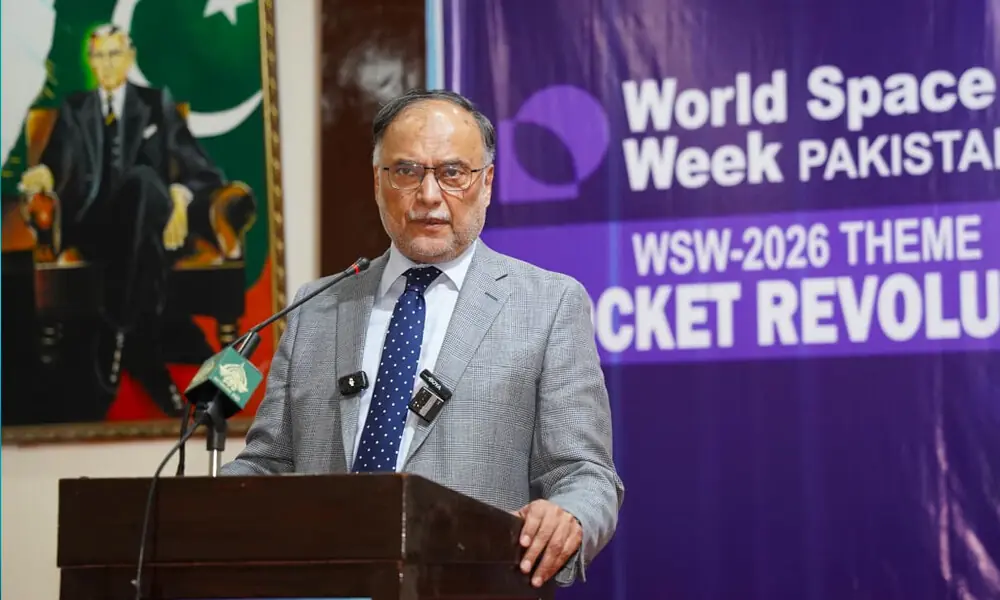
Addressing the concluding ceremony of World Space Week in Narowal, Iqbal highlighted the importance of space technology in various fields, including agriculture, communications, climate monitoring, education, and national security.
The minister emphasized that scientific research and space exploration are essential for technological advancement and the pursuit of knowledge, aligning with the teachings of the Holy Quran, which encourage reflection on the creation of the universe.
Pakistan aims to achieve a lunar landing by 2035, and cooperation with China will play a crucial role in achieving this goal, according to Iqbal.
To promote scientific awareness and inspire the next generation, the minister announced plans to establish Pakistan’s first Space Museum at the University of Narowal. The museum will be a hub for promoting space science and technology.
World Space Week 2026 was celebrated for the first time in Narowal in collaboration with SUPARCO, with the aim of raising awareness among the younger generation about space science, scientific research, and modern technology.
The minister highlighted the achievements of young Pakistanis, particularly the University of Narowal, which secured first position at the Islamabad Science Festival. This achievement reflects the talent and potential of the country’s youth.
Iqbal also noted that improved access to higher education is enabling students who have previously faced financial barriers to achieve distinction, further emphasizing the importance of education in fostering scientific curiosity and research.


