Key Takeaways
- Pakistan's Foreign Office spokesperson Sajjad Haider Khan stated the Makkah alliance is defensive.
- No plans for expansion of the Makkah Joint Defence Agreement exist at present.
- Defence Minister Khawaja Muhammad Asif said the pact could become operational if Yemen conflict spills into Saudi Arabia.
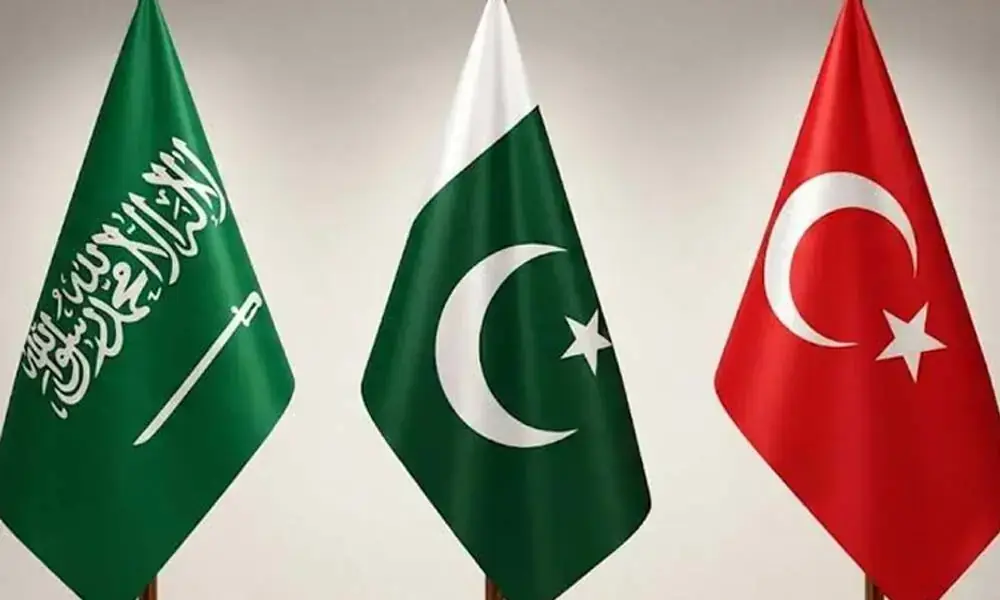
Pakistan has reaffirmed that the Makkah Joint Defence Agreement, signed between Pakistan, Saudi Arabia, and Türkiye on August 7, is a defensive alliance, according to a statement by the Foreign Office spokesperson Sajjad Haider Khan.
Khan stated that there are no plans to expand the agreement, emphasizing its defensive nature and its commitment to regional peace, stability, and deterrence.
The agreement, which commits the three nations to treating an armed attack against any one as an attack against all, similar to NATO’s Article 5, has been reaffirmed as purely defensive by leaders on different occasions.
Defence Minister Khawaja Muhammad Asif, speaking in a TV interview, clarified that the Makkah Joint Defence Agreement could become operational if the ongoing conflict in Yemen spills over into Saudi Arabia.
Asif stated that the agreement is a collective defence arrangement, under which aggression against one member would be treated as aggression against all three.
He emphasized that Pakistan is bound by the agreement and would honour its commitments if the need arose, stressing that the pact is intended for joint defence and collective assistance rather than aggression.
The agreement provides for enhanced defence cooperation across all areas, including joint military exercises, defence information exchange, and defence industry collaboration.
A permanent secretariat will be established in Saudi Arabia, with Pakistan providing the first secretary general for a three-year term.