Key Takeaways
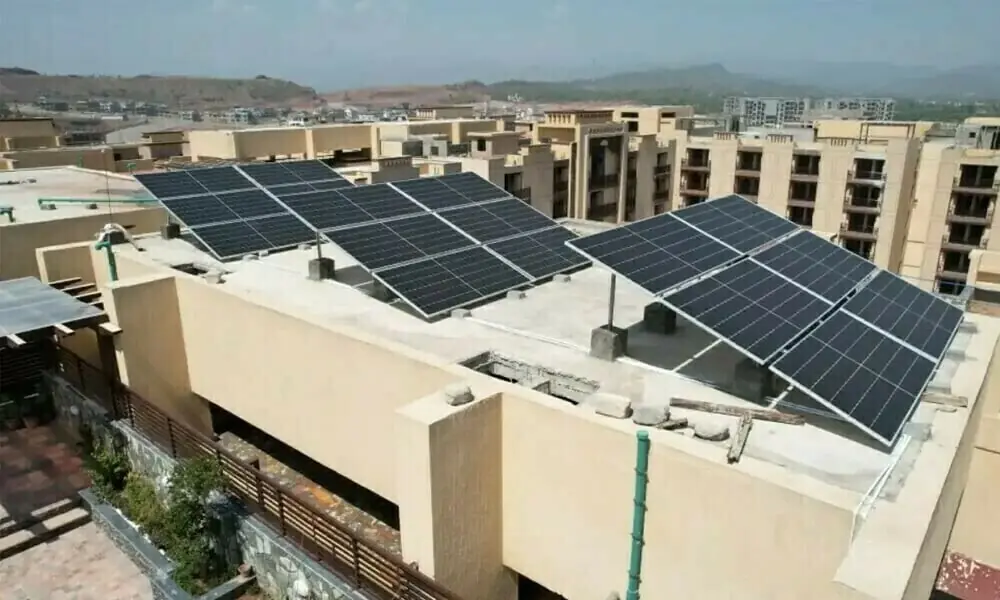
- A new study proposes using swarm grids to integrate rooftop solar systems.
- Regulatory reform is identified as the key missing link for large-scale deployment.
- Swarm grids could potentially operate as commercially viable businesses in urban areas.
A new study by the Policy Research Institute for Equitable Development (PRIED) suggests that Pakistan can harness its growing rooftop solar sector through the use of decentralized, community-driven 'swarm grids'.
Swarm grids are defined as organic, bottom-up micro-grids built by interconnecting decentralized solar home systems or small renewable energy units without requiring a central master controller.
The research, which comprises two publications, examines the feasibility of swarm grids in both urban and rural settings, and proposes a transition agenda and implementation roadmap.
Despite the rapid expansion of distributed solar, blackouts, brownouts, and prolonged load-shedding continue in many areas, highlighting the need for better coordination of these systems.
PRIED defines a swarm grid as a digitally coordinated, decentralized local electricity network through which households and businesses can consume their own solar power, store electricity, sell surplus electricity to neighbours, and purchase power from nearby prosumers, while using the national grid primarily as a backup.
The study tested the concept against two contrasting settings: Islamabad as an urban case, with relatively dense and diverse demand on an established grid, and Tharparkar in Sindh as a rural case, characterized by dispersed communities and seasonal agricultural and pastoral livelihoods.
The assessment used household surveys, solar-resource data, and an hourly dispatch model to examine the technical, economic, and institutional feasibility of the model, as well as the willingness of communities to participate.
The study found that swarm grids are technically feasible in both urban and rural areas, although their economic models would differ. Urban swarm grids could potentially operate as commercially viable, privately financed businesses, while rural projects would require targeted upfront investment and community capacity-building.
The research identified the regulatory framework as the most significant common obstacle. Under the existing system, peer-to-peer electricity trading and third-party sales within the territory of a distribution company are restricted.
The study argues that new regulations would be required to determine who can sell electricity, at what price, and through what settlement mechanism. Without such changes, swarm grids are unlikely to progress from feasibility studies to large-scale commercial deployment.