Key Takeaways
- Malaysia started sending back around 1,500 Myanmar nationals on Tuesday.
- The plan involves repatriating 5,000 Myanmar citizens from detention centers.
- Rights groups express concern over the potential dangers migrants face upon return.
Malaysia has initiated the repatriation of approximately 1,500 Myanmar nationals, marking the beginning of a scheme that aims to return 5,000 individuals from detention centers. The move comes amidst heightened anti-migrant sentiment in Malaysia.
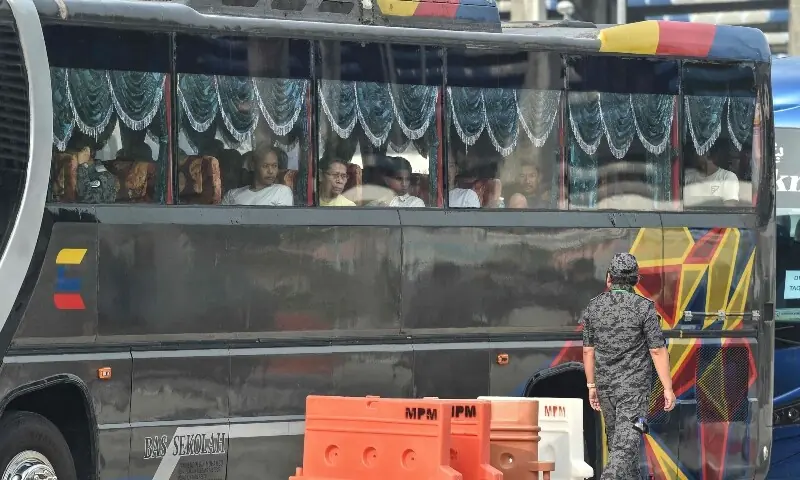
The first group of migrants arrived at the Majlis Perbandaran Manjung stadium near the Lumut naval base in northwestern Malaysia, where they were processed before being transported to the naval base and eventually by ship to Myanmar.
A Myanmar security source, speaking on condition of anonymity, stated that the boats carrying the migrants are expected to dock at Thanlyin Navy Base just south of Yangon by the end of the week. Marine traffic websites confirmed the presence of Myanmar’s auxiliary support and hospital ship Than Lwin outside the naval base.
Rohingya, a persecuted Muslim minority, constitute two-thirds of the 190,000 Myanmar refugees and asylum seekers in Malaysia, according to the United Nations. Prime Minister Anwar Ibrahim announced the plan in July, following the detention of over 100 Rohingya who sought help outside the UN refugee agency’s office in Kuala Lumpur.
The plan was designed to address concerns raised by the UN and rights groups, who had criticized Myanmar for its treatment of Rohingya. However, advocacy organizations remain wary, fearing that dire conditions in detention centers may have coerced individuals into agreeing to repatriation.
Rights groups have called for the Malaysian government to halt deportations and engage in talks with civil organizations about the situation in Myanmar. Anwar has invited Myanmar’s coup leader-turned-civilian president Min Aung Hlaing for an official visit to expedite the process, but civil groups urge that such engagement must not compromise Malaysia’s reputation and integrity.
Malaysia’s home affairs ministry reported that 10,388 Myanmar nationals were held at immigration detention depots by mid-August, with not all considered refugees. Despite not being a signatory to the 1951 Refugee Convention, Malaysia shelters one of Southeast Asia’s largest refugee populations.
AFP fact-checkers have found that Rohingya refugees in Malaysia face significant challenges, including limited access to basic services and legal protections.