Key Takeaways
- Professor Chris Reynolds criticizes Macron’s speech for lacking solutions to youth concerns.
- The escalating protests highlight a growing disconnect between political leadership and public frustration.
- Analyst warns that violent unrest could overshadow legitimate grievances of peaceful protesters.
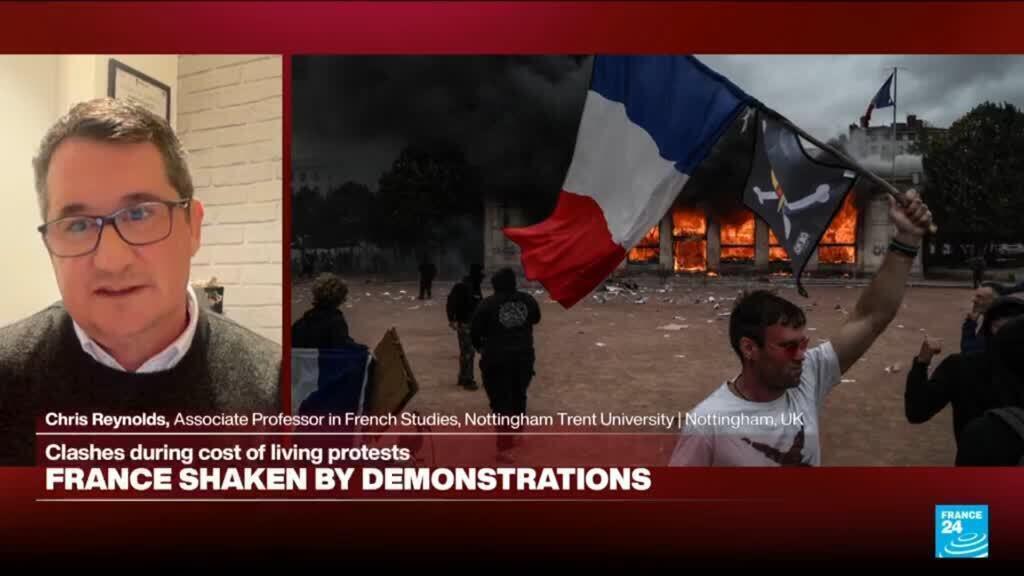
In a recent address, French President Emmanuel Macron failed to address the core concerns of the youth, according to Professor Chris Reynolds of Nottingham Trent University. Reynolds, an expert in French and European studies, described Macron’s speech as ‘characterised by a troubling “sense of detachment,”’ suggesting that the government’s response to the ongoing protests is inadequate.
The escalating protests, which have been ongoing for several months, are driven by rising living costs and fears for the future, particularly among the younger generation. Reynolds drew parallels between the current situation and historical movements such as May 1968 and the Yellow Vest protests, highlighting the potential for violent unrest to overshadow the legitimate concerns of the protesters.
According to Reynolds, the government’s approach risks undermining public sympathy and reshaping political debate ahead of the upcoming presidential election. He argues that the current disconnect between the political leadership and the public is reminiscent of past social unrest, where the government’s response was seen as insufficient and ultimately contributed to broader societal issues.
The protests, which have seen various groups from different backgrounds and age groups participating, have been largely peaceful. However, there are growing fears that the situation could escalate, with some protesters expressing concerns about the potential for violence and its impact on the legitimacy of their cause.
Reynolds’ analysis suggests that the government’s failure to address the structural grievances driving the protests could lead to a further erosion of public trust. He warns that without a more effective response, the legitimate concerns of the protesters could be overshadowed by the potential for violent unrest, which could have long-term implications for French politics and society.
The ongoing protests have already had a significant impact on French society, with businesses and public services affected. The government’s response has been criticized for being too slow and insufficient in addressing the root causes of the unrest. Reynolds argues that a more proactive and empathetic approach is needed to bridge the gap between the government and the public.
As the presidential election approaches, the government faces increasing pressure to address the concerns of the youth and the broader public. The current situation highlights the need for a more inclusive and responsive approach to governance, one that addresses the structural issues driving the protests rather than simply reacting to them.
The protests have also raised questions about the future of French society and the role of the government in addressing the needs of its citizens. Reynolds’ analysis suggests that the current disconnect between the political leadership and the public could have far-reaching consequences, potentially reshaping the political landscape in the coming years.
President Emmanuel Macron’s latest address was characterised by a troubling “sense of detachment,”
Chris Reynolds, Professor of French and European Studies at Nottingham Trent University