Key Takeaways
- Federal Minister for Finance & Revenue Senator Muhammad Aurangzeb emphasized the need for sustainable and productive growth.
- Federal Minister & Adviser to the Prime Minister on Privatisation Muhammad Ali called for Pakistan to become a creator of technology.
- Minister of State for Finance and Railways Bilal Azhar Kayani highlighted the importance of structural reforms and better governance.
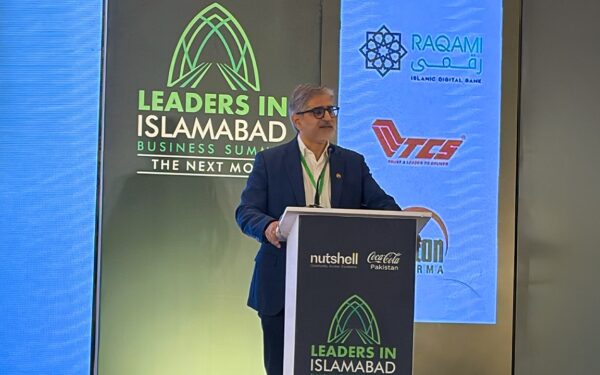
The 9th edition of the LEADERS IN ISLAMABAD BUSINESS SUMMIT (LIIBS) 2026, themed ‘The Next Move,’ concluded in Islamabad with a strong emphasis on the need for decisive action to transform Pakistan’s economic potential into sustained advantage.
In his inaugural ministerial keynote, Senator Muhammad Aurangzeb, Federal Minister for Finance & Revenue, highlighted the country’s recent economic progress, noting a 3.7% GDP growth last fiscal year and the momentum continuing into the current fiscal year.
Large-scale manufacturing has turned around, while strong remittance inflows and IT exports are supporting the external account, he said. The minister stated that the direction of travel is clear: moving beyond a consumption-led growth model and building an economy supported by sustainable and productive growth.
Federal Minister & Adviser to the Prime Minister on Privatisation, Muhammad Ali, in his ministerial address, underscored the need for Pakistan to become a creator of technology, not just a consumer. He emphasized the importance of having productive businesses at a scale that can compete globally, with a focus on education, equal workforce participation, and the development of young people’s skills.
Bilal Azhar Kayani, Minister of State for Finance and Railways, stressed the need for structural reforms with better governance. He highlighted the importance of federal and provincial governance alignment, breaking away from the cycle of spending ungoverned and turning towards IMF loans, and increasing exports to develop the economy.
In the Closing Session, Senator Anwar-ul-Haq Kakar, Caretaker Prime Minister of Pakistan (2023-24), addressed the country’s security challenges, stating that the focus should be on understanding and fixing underlying economic constraints rather than attributing weak growth to terrorism.
Senator Dr. Musadik Malik, Federal Minister for Climate Change & Environmental Coordination, called for policies based on skills and merit, rather than elite capture. He emphasized the need for a level playing field and the importance of removing hurdles for university students to participate in the economic future.
The Summit examined Pakistan’s inflection point across economic policy, technology, and global positioning, bringing together the perspectives needed to chart a way forward. The cross-sector lens set the stage for the day’s proceedings, with global institutional leaders and industry executives converging across six sessions.
The framework for the next move in Pakistan’s economic and technological growth was thus established, with a clear focus on sustainable and productive growth, technological innovation, and structural reforms.
We had about 3.7% GDP growth last fiscal year, and the momentum is continuing into this fiscal year. Large-scale manufacturing has turned around, while strong remittance inflows and IT exports are supporting the external account. The direction of travel is clear that we need to move beyond a consumption-led growth model and build an economy supported by sustainable and productive growth.
Senator Muhammad Aurangzeb, Federal Minister for Finance & Revenue, Federal Minister for Finance & Revenue
Pakistani cannot just be a consumer of technology; we need to be the creator. Our ambition is to have productive businesses at a scale that compete with global entities. We need stronger education and equal workforce participation. We need to extend talent to manufacturing, defense, and other technologies of the future.
Muhammad Ali, Federal Minister & Adviser to the Prime Minister on Privatisation, Federal Minister & Adviser to the Prime Minister on Privatisation
We have good people and we should do better for them. We need structural reforms with better governance. Federal and provincial governance alignment is crucial. We need to break away from the cycle of spending ungoverned and then turning towards IMF loans. We need to increase exports to develop. We cannot do effective policy-making without coordinating with the private sector, which is why super taxes were reduced by the government last year. We are making sure that our agricultural sector and SMEs are getting finances. We are reforming entities like SMEDA.
Bilal Azhar Kayani, Minister of State for Finance and Railways, Minister of State for Finance and Railways