Key Takeaways
- LG has rejected claims that its smart TVs continuously record conversations or secretly upload ambient audio.
- The company states that voice data is only processed when a user presses and holds the voice button or when far-field voice recognition is enabled.
- LG acknowledges network scanning but denies it as user surveillance, and ACR can be disabled by users.
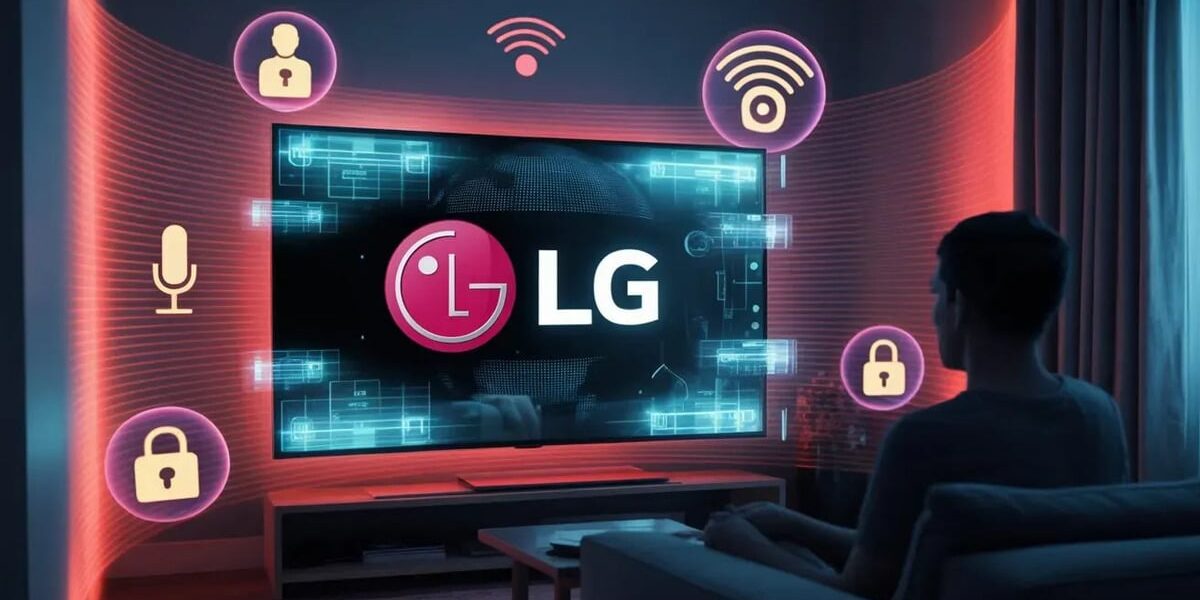
LG Electronics has denied claims that its smart TVs continuously record conversations or secretly upload ambient audio, responding to a recent investigation by YouTube channel Gamers Nexus. The investigation, which involved network packet captures and firmware analysis, raised concerns about the privacy practices of LG's televisions.
According to the researchers, LG smart TVs could continue collecting and storing certain information while offline or in standby. They also alleged that the TVs could scan devices connected to the same local network, gather information about nearby Wi-Fi networks, and use built-in microphones to capture audio.
In response, LG stated that its televisions process voice data only in two situations: when a user presses and holds the voice button on the remote or when optional far-field voice recognition is enabled, and the television detects the 'Hi LG' wake phrase. The company clarified that audio used locally to listen for the wake phrase is processed on the television and deleted when no matching command is detected, and data is not sent to its servers.
LG acknowledged that its smart TVs can discover other devices connected to the same local network, a standard feature used for functions such as device pairing, media sharing, and communication between products. The company did not characterize this process as user surveillance.
Regarding Automatic Content Recognition (ACR), LG stated that it is an optional feature that requires user consent and can be disabled through the television’s privacy settings. The company added that information collected through ACR is not used for advertising unless the user has specifically agreed to allow such use. LG maintained that ACR is not unique to LG and is commonly used across the smart TV industry to recognize programming and other content being viewed.
The company’s response primarily addresses the allegation that its televisions continuously listen to conversations and concerns surrounding network scanning and ACR. LG did not directly respond to every technical claim raised during the Gamers Nexus investigation. The company maintains that users retain control over privacy-related features and says it continues to monitor and update the security of its smart TV platform.
For now, the dispute largely comes down to the researchers’ interpretation of the behavior they observed and LG’s explanation of how its software and voice-recognition systems are designed to operate.