Key Takeaways
- The death toll from a ferry accident in Indonesia has reached 66.
- Search efforts are entering their 16th day, with 69 people still missing.
- Divers face dangerous conditions to locate survivors in the capsized vessel.
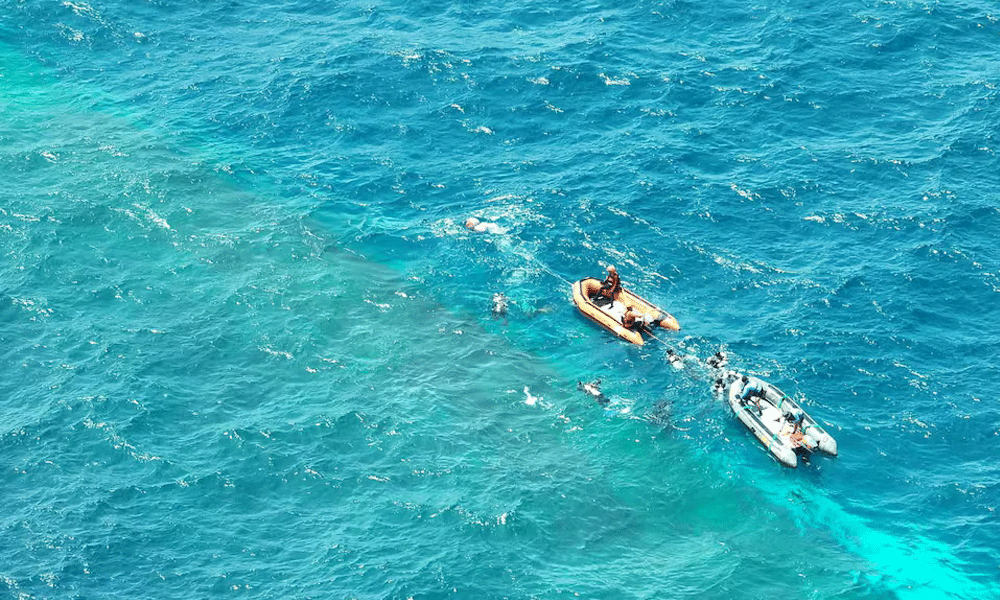
The death toll from a ferry accident in Indonesia has risen to 66, as search and rescue operations entered their 16th day. The Virgo Transport 8 ferry, which was carrying 243 people, including 30 crew members and an unknown number of vehicles, capsized in bad weather on September 13 during a voyage from Surabaya to Banjarmasin.
Rescue efforts have been hampered by the dangerous conditions on the 4,277-ton vessel. Divers are navigating through unstable debris, dealing with side-to-side tilting, and sharp objects scattered throughout the ship. The divers are also facing dense gas concentrations and leaking fuel, which pose significant health hazards.
Hardiansyah Putra, a senior official from Indonesia’s search and rescue agency, stated that divers were limited to a maximum depth of 27 metres. The agency is hopeful of finding the missing passengers in the cabins, but the high-risk challenges have slowed the progress of the search.
From the Java Sea where the ship sank, rescuers are expected to airlift some recovered bodies using a helicopter. The search and rescue operation is expected to continue for several more days, with the hope of locating the remaining missing individuals.
The current death toll stands at 66 people, with 108 survivors and 69 still missing, according to agency figures. The Indonesian ferry system, which relies on ferries to connect its 17,000 islands, has a history of accidents, making the search and rescue efforts even more critical.
The ship’s operator is required to right the vessel and bring it to the surface, a process that could take several days. The high-risk challenges facing the divers have added to the anguish for the friends and family of the missing individuals.
Indonesia’s reliance on ferries for transportation means that the safety of these vessels is of utmost importance. The ongoing search and rescue operation highlights the need for improved safety measures and better infrastructure to prevent such accidents in the future.