Key Takeaways
- The Dina Nath Well, commissioned in the mid-19th century, remains a significant landmark.
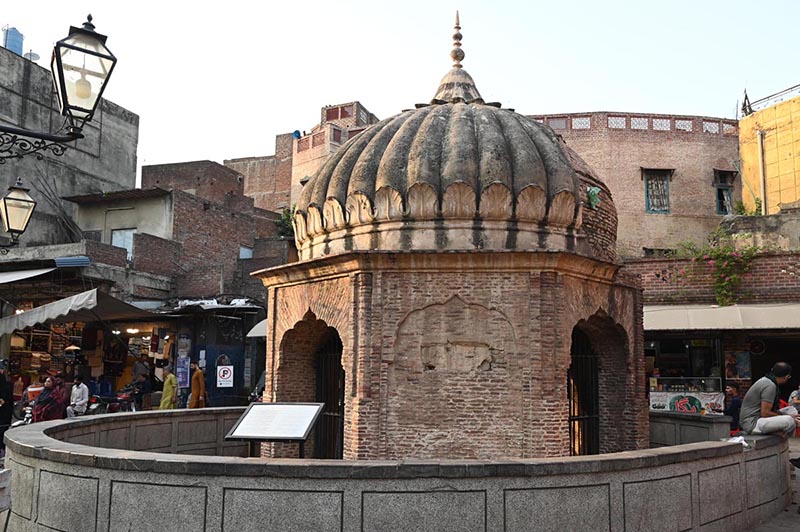
- Located inside Delhi Gate, the well is enclosed within a walled structure near Wazir Khan Chowk.
- The well was commissioned by Raja Dina Nath during Maharaja Ranjit Singh’s reign.
The Dina Nath Well, a historic landmark in Lahore’s Walled City, continues to stand as a testament to the region’s rich cultural heritage. Commissioned in the mid-19th century, the well was built during the reign of Maharaja Ranjit Singh, a period marked by significant architectural and cultural development in the city.
Situated inside Delhi Gate, the well is enclosed within a walled structure, providing a protective environment that has helped preserve its original structure and design. This well, named after Raja Dina Nath, who was a prominent figure during that era, is a prime example of the architectural and engineering skills of the time.
The well’s location near Wazir Khan Chowk, a bustling commercial area in the Walled City, highlights its historical significance. It serves not only as a water source but also as a focal point for local residents and tourists alike, offering a glimpse into the past.
The well’s preservation is a testament to the efforts of local authorities and conservationists who have worked to maintain and restore such historical sites. This preservation ensures that future generations can continue to appreciate the architectural and cultural heritage of Lahore.
The Dina Nath Well stands as a symbol of the city’s rich history, attracting visitors and locals who come to admire its intricate design and learn about its historical context. Its continued existence is a reminder of the importance of preserving such landmarks for the benefit of all.