Key Takeaways
- France will reinforce police with troops for upcoming protests.
- Interior Minister acknowledges failures in response to recent violence.
- Targeted curfews have helped restore calm in some areas.
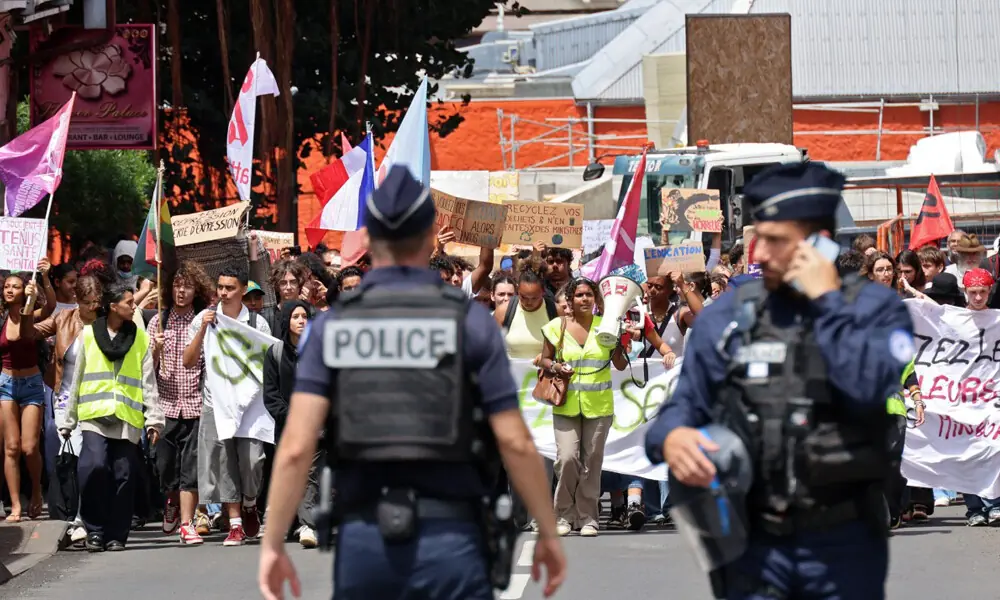
France is set to deploy troops to bolster police forces in anticipation of further protests planned for Saturday, following a series of violent demonstrations that swept through major cities on October 17.
Prime Minister Sebastien Lecornu stated, 'The deployment next Saturday will be massive,' emphasizing the government's commitment to restoring order.
Interior Minister Laurent Nunez admitted that the military would be deployed alongside police, acknowledging shortcomings in the state's response to the unrest.
The government has pledged to overhaul tactics, citing intelligence failures, static police deployments, and the decision not to cancel planned police leave as contributing factors to the failure to contain the violence.
In a rowdy debate, Nunez apologized for the failings, saying, 'I deeply regret what happened. I accept my share of responsibility.'
The unrest, which shocked France due to its scale and the apparent inability of police to contain it, has inflamed tensions ahead of next year's presidential elections, with candidates from the far right and hard left performing strongly in polls.
Protests in other European countries, including Italy and Albania, have added to concerns that anger over living standards could spread across the continent, particularly as many nations, including France, struggle with budget issues.
A night of relative calm followed the imposition of targeted curfews in several areas affected by the turmoil, with officials reporting that these measures have helped reassert control.
In central Paris, police cleared and guarded the Place de la Republique overnight, with a helicopter overhead, while in Lille, officers patrolled the city centre, checking bypassers' identities.
Marseille mayor Benoit Payan announced that curfews for minors would be imposed around commercial areas hardest hit by the weekend's riots, starting Tuesday night.
Parliament is setting up a commission of inquiry to establish the causes of the unrest, while authorities have assigned 200 investigators to identify and track down those involved in the street violence.
Police arrested a man suspected of starting a blaze that destroyed a historic town hall in the central city of Limoges during the rioting. Officials said he had been on a security watch list and belonged to an ultra-left group.
The deployment next Saturday will be massive.
Sebastien Lecornu, Prime Minister
I deeply regret what happened. I accept my share of responsibility.
Laurent Nunez, Interior Minister