Key Takeaways
- Finance Minister Muhammad Aurangzeb held a kick-off meeting with the IMF mission in Islamabad.
- The talks focus on the fourth review of Pakistan's $7 billion Extended Fund Facility and the third review of the $1.4 billion Resilience and Sustainability Facility.
- Successful completion could result in a disbursement of about $1.2 billion.
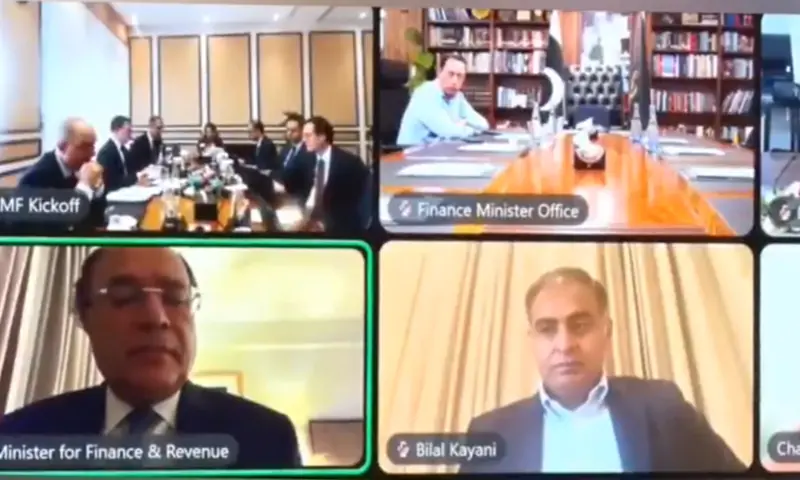
Finance Minister Muhammad Aurangzeb initiated discussions with a visiting staff mission of the International Monetary Fund (IMF) on Tuesday. The meeting, held virtually, was aimed at reviewing Pakistan's $7 billion Extended Fund Facility (EFF) and the $1.4 billion Resilience and Sustainability Facility (RSF).
The IMF mission, led by Iva Petrova, an adviser in the IMF's Middle East and Central Asia Department, is in Pakistan for the fourth review of the EFF and the third review of the RSF. The talks are part of a broader assessment of Pakistan's economic health and its alignment with the structural benchmarks set by the IMF.
Aurangzeb briefed the IMF team on the latest macroeconomic indicators, improvements in credit rating, and the overall investment climate, despite the challenges posed by the prolonged Iran conflict. The discussions are expected to continue over the coming days, with the authorities aiming to address any gaps in compliance with the EFF and RSF requirements.
The authorities are currently in breach of structural benchmarks related to the Sovereign Wealth Fund (SWF) law, which was missed in March. The federal government has already notified new procurement rules, two days ahead of the deadline, to promote greater transparency and competition in public procurement.
The new procurement rules, which came into effect on September 30, 2026, include provisions for the use of the EPADS (E-Pak Acquisition and Disposal System) for direct contracting with state-owned enterprises (SOEs). The IMF had reservations about the preferential treatment of SOEs for direct contracting, as outlined in Rule 32 of the new rules.
The IMF mission began its discussions from Karachi earlier this month, engaging with the State Bank of Pakistan (SBP) and other stakeholders. The mission has since held engagements with officials from the finance ministry, the Federal Board of Revenue (FBR), the Establishment Division, and the finance secretaries of Khyber Pakhtunkhwa and Punjab.
The successful conclusion of the talks could result in a disbursement of about $1.2 billion, including $1 billion under the EFF and $200 million under the RSF. However, the authorities may require waivers from the IMF’s executive board for any slippages on structural benchmarks, particularly regarding the amendments to the Sovereign Wealth Fund Act.
The IMF's review is crucial for Pakistan's economic stability and access to international financing. The authorities are committed to addressing the challenges and ensuring compliance with the structural benchmarks to secure the necessary financial support.