Key Takeaways
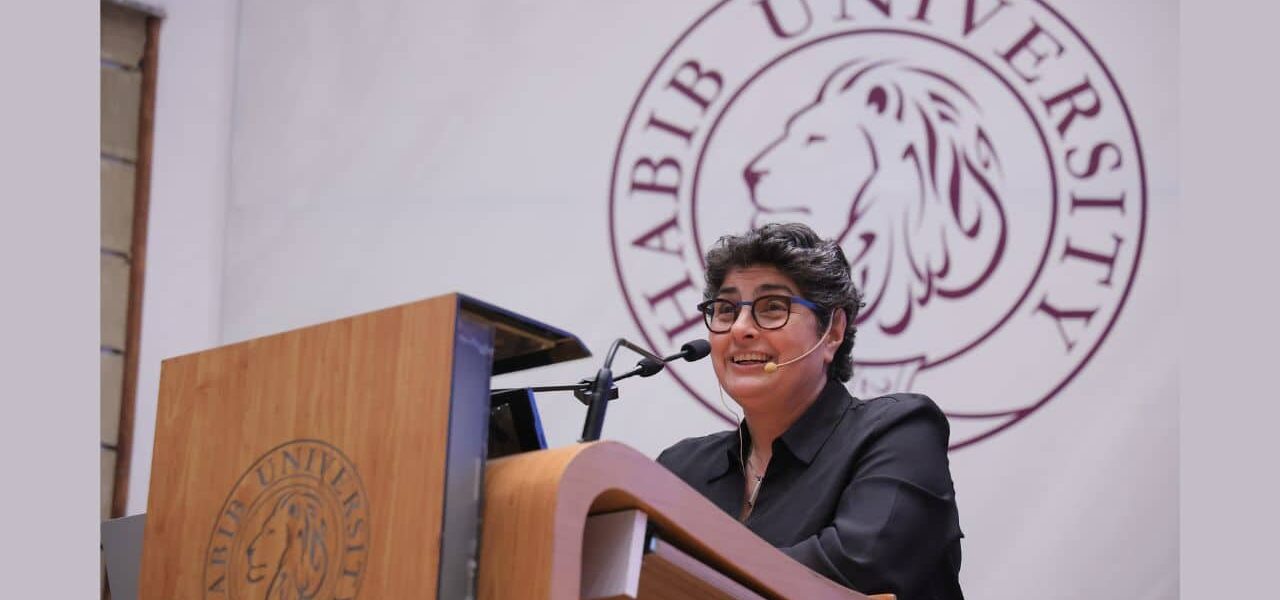
- Dr. Nergis Mavalvala, Dean of the School of Science at MIT, delivered the 10th Yohsin Lecture at Habib University.
- The lecture focused on the importance of curiosity and the role of universities in fostering intellectual freedom.
- President Wasif Rizvi highlighted the significance of the lecture for the University community and the broader scientific community.
Habib University hosted Dr. Nergis Mavalvala, Dean of the School of Science at the Massachusetts Institute of Technology (MIT), for its 10th Yohsin Lecture. The lecture, titled 'The Joy of Discovery: Curiosity, Science, and the Pivotal Role of Universities,' was delivered to a full auditorium of students, faculty, alumni, industry leaders, and Pakistan’s wider scientific community.
In her lecture, Dr. Mavalvala explored the human drive for knowledge, emphasizing that curiosity is not always about immediate utility. She stated, 'Even pre-human cultures were looking up at the sky, in part because it was just mysterious. A hundred years from now the only thing that will matter is that we’ve opened a new window into the universe.'

Dr. Mavalvala argued that some of the most significant discoveries began as questions with no obvious payoff. She highlighted the importance of universities in cultivating wonder, creativity, perseverance, and intellectual freedom, beyond merely training professionals.
President Wasif Rizvi expressed his gratitude for Dr. Mavalvala’s visit, stating, 'I have professional sympathy as well for the detection of faint signals, as the president who raises funds for the most generous private university in the country. Access of this kind had not been attempted in Pakistan before. It exists because the community in this room and outside decided that it should.'
During her visit, Dr. Mavalvala toured the campus, held a conversation with faculty on nurturing curiosity in the classroom, and met with outstanding science and humanities students from leading schools across Karachi. She also spent exclusive time with Habib University’s own students and alumni, and joined sessions with the Entrepreneurs’ Organization and Pakistan’s wider scientific community.
The lecture concluded with an extended question-and-answer segment, where Dr. Mavalvala addressed key challenges in the national context, noting, 'Every single person at this university is contributing to the future of Pakistan through their curiosity and dedication.'
President Wasif Rizvi further emphasized the significance of the lecture, stating, 'The students in this hall are the answer to anyone who asks what it is that philanthropy can do. They are the future leaders and innovators of Pakistan.'
The two-day visit marked a high point in Karachi’s intellectual calendar, with Dr. Mavalvala’s presence signifying the University’s commitment to fostering a culture of curiosity and discovery among its students and the broader scientific community.
Even pre-human cultures were looking up at the sky, in part because it was just mysterious. A hundred years from now the only thing that will matter is that we’ve opened a new window into the universe.
Dr. Nergis Mavalvala, Dean of the School of Science at MIT
I have professional sympathy as well for the detection of faint signals, as the president who raises funds for the most generous private university in the country. Access of this kind had not been attempted in Pakistan before. It exists because the community in this room and outside decided that it should.
Wasif Rizvi, President of Habib University