Key Takeaways
- Chinese researchers have created an aluminum material based on eggshells to protect spacecraft from space debris.
- The new material aims to enhance protection against debris fragments that pose a growing threat to satellites and other space objects.
- Inspiration comes from the unique mechanical properties of eggshells, which can withstand force without completely breaking.
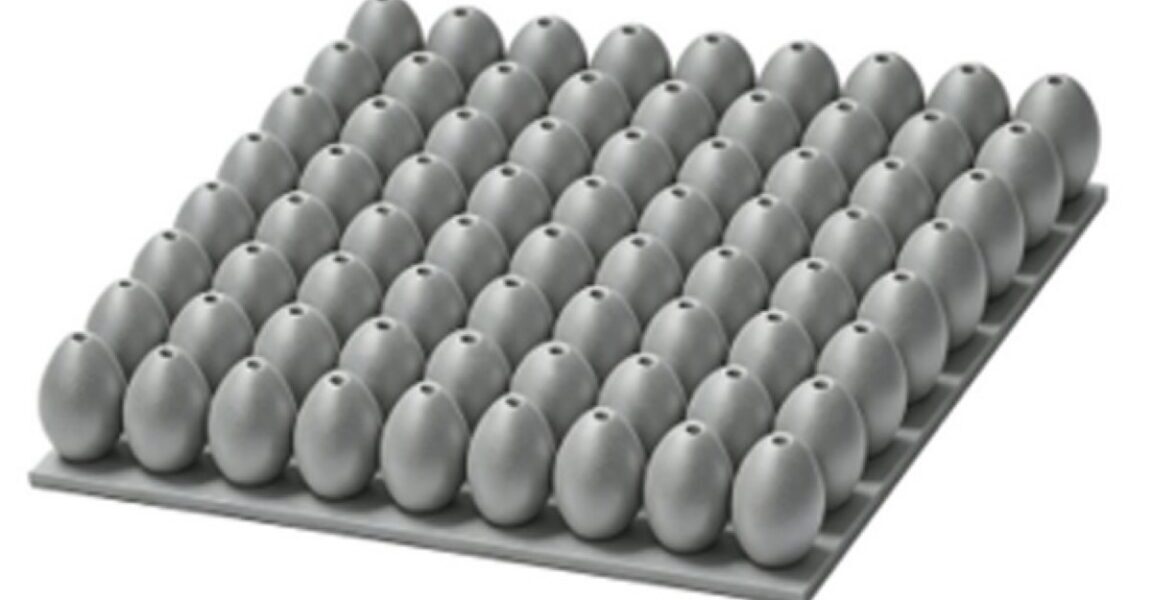
Chinese scientists have developed a new aluminum material inspired by the unique mechanical properties of eggshells, aiming to protect next-generation spacecraft from space debris, according to a new paper published in the Journal of Applied Physics.
In 2007, a piece of space debris punched a bullet-like hole through the radiator panel of the US space shuttle Endeavor, highlighting the increasing threat posed by space debris as more satellites and spacecraft are launched into orbit.
The space debris problem has intensified, making the need for advanced protective materials more urgent than ever.
Eggshells have long fascinated scientists due to their ability to withstand force without completely breaking. In 2012, MIT mechanical engineer Pedro Reis co-authored a paper demonstrating the link between an egg's ovoid geometry and its rigidity, a key factor in predicting how much force an object can endure before cracking.
Reis began studying eggshells after participating in a popular physics demonstration: walking on cartons of eggs without breaking them. The key, he learned, was to align the eggs with their narrow tip (the most crack-resistant part) pointing up, and then carefully place one's feet to distribute one's weight over the entire surface area.
While it takes around 5.5 pounds of force to crack an egg, the direction and distribution of the force play a significant role in the outcome. This principle inspired the Chinese researchers to develop a material that mimics the eggshell's ability to withstand force without breaking completely.
The new aluminum material is designed to offer enhanced protection against debris fragments, which can cause significant damage to spacecraft and satellites. The researchers believe that this material could be a game-changer in the field of space debris protection.
The development of this material is part of a broader effort to address the growing problem of space debris, which poses a significant threat to the safety and functionality of space assets.