Key Takeaways
- Finance Minister Muhammad Aurangzeb accepted the chairmanship of the Borrowers’ Platform.
- The platform aims to give developing nations a space to coordinate and share knowledge on debt challenges.
- Aurangzeb discussed macroeconomic stability and reforms with IMF officials during his visit.
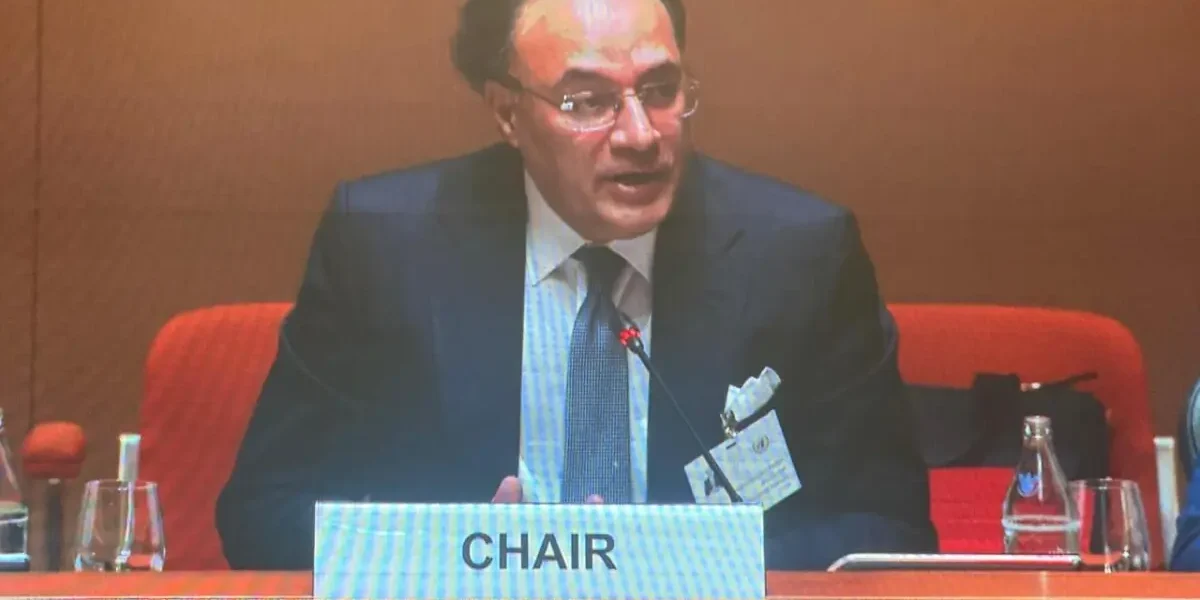
Finance Minister Muhammad Aurangzeb has assumed the chairmanship of the Governing Council of the Borrowers’ Platform, an international initiative aimed at providing developing nations with a platform to coordinate, share knowledge, and speak with a collective voice on sovereign debt challenges.
Aurangzeb accepted the role on the sidelines of the World Bank Group–IMF Annual Meetings 2026 in Bangkok, Thailand, where he acknowledged the contributions of member countries and the secretariat in operationalising the platform.
During his tenure, Aurangzeb outlined Pakistan’s priorities under the 2026–27 work plan, which include strengthening debt-management practices, sharing reform experiences, and exploring innovative development-financing instruments.
In a separate engagement, Aurangzeb met with Dan Katz, First Deputy Managing Director of the International Monetary Fund (IMF), to discuss macroeconomic stability, structural reforms, and external challenges.
The finance minister highlighted Pakistan’s improved investor confidence, sovereign credit rating upgrades, and renewed access to international capital markets, reaffirming the government’s commitment to fiscal discipline, tax reforms, privatisation, and sustainable economic growth.
Both sides welcomed the staff-level agreement and acknowledged improvements in fiscal performance, foreign exchange reserves, inflation, and external sector stability.
Aurangzeb also addressed a press conference, welcoming the rapid progress in establishing the platform’s institutional foundations, governance arrangements, and shared work programme, as well as growing interest from prospective member countries.
The finance minister’s visit to Bangkok, Thailand, from October 12 to 18, 2026, is part of an extensive programme of over 60 high-level engagements with international financial institutions, finance ministers, policymakers, development partners, global investors, banks, credit rating agencies, think tanks, and international media.
Pakistan continues its transition from macroeconomic stabilisation towards sustainable, investment- and export-led growth, while advancing structural reforms and strengthening engagement with international capital markets and development partners.