Key Takeaways
- On September 11, 2001, America experienced attacks of Biblical proportions.
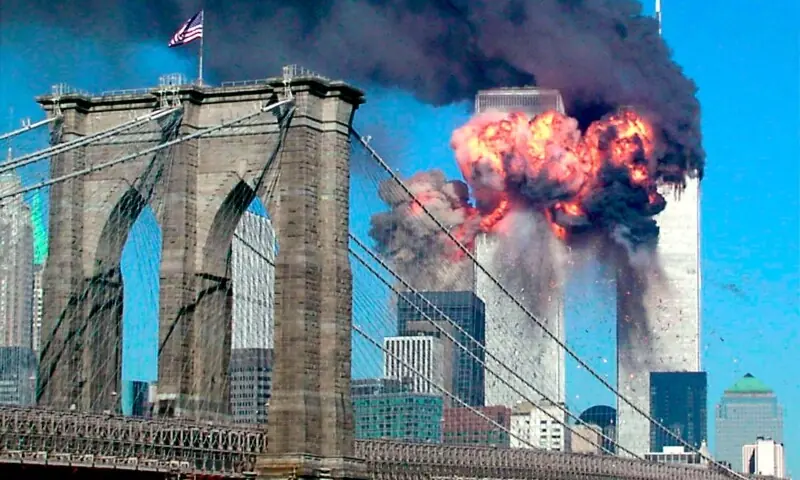
- The collapse of the World Trade Centre and damage to the Pentagon marked the physical destruction.
- The attacks altered American perceptions of safety, government, and one another.
On a bright September morning in 2001, America faced a day that would change the nation forever. The attacks, described as of 'Biblical proportions,' began with the first tower of the World Trade Centre collapsing in a cloud of dust and debris. Less than half an hour later, the second tower followed suit, leaving a gaping hole in the heart of New York City.
In Washington, the capital city, the atmosphere was tense. Armoured personnel carriers lined the streets, and men in uniform were seen everywhere. The city, which had appeared familiar, suddenly looked unfamiliar. The White House, a symbol of American power, was not spared the attention of a man on a bicycle who shouted, 'There goes a terrorist. Catch her, catch her,' pointing at the author's wife, Bushra, who was wearing a shalwar-kameez.

Despite the fear and uncertainty, Washington did not descend into chaos. Government functions continued, and people attempted to understand the new reality. The Pentagon, another symbol of American might, was struck by a commercial airliner, leaving a large hole in the building and smoke rising into the sky. The damage was visible, but the consequences were far more profound.
The attacks on the World Trade Centre and the Pentagon were not just physical destruction. They changed the way Americans thought about safety, government, and one another. The attacks made Americans realize that the great threats to their country could happen at home. The perception of safety was shattered, and the government's role in protecting its citizens became a central issue.
The attacks also altered the way Americans viewed immigration and surveillance. The fear of terrorism led to increased scrutiny and new policies that affected the lives of many. The attacks made Americans more aware of each other, fostering a sense of unity and shared purpose. However, this unity was often tinged with suspicion and fear, as innocent people were sometimes perceived as threats.
The aftermath of the attacks saw a surge in patriotism and a renewed commitment to the American flag. Flags were flown near the base of the destroyed World Trade Centre, symbolizing the resilience and unity of the nation. The attacks also led to a global war on terror, with America taking a more active role in international affairs.
In the years that followed, the events of September 11, 2001, continued to shape American society. The physical destruction was immense, with nearly 3,000 people losing their lives. But the psychological and social impact was even greater, altering the way Americans perceived their world and their place in it.
The day America lost its soul was not just a day of tragedy but a day that marked the beginning of a new era. The attacks on the World Trade Centre and the Pentagon were the catalyst for a series of changes that would reshape the nation and its place in the world.