Key Takeaways
- Federal Minister Ahsan Iqbal sets $1 trillion economy target by 2035.
- Pakistan's IT and ICT exports reached $4.6 billion in the last fiscal year.
- Government focuses on digital transformation, AI, and regional connectivity.
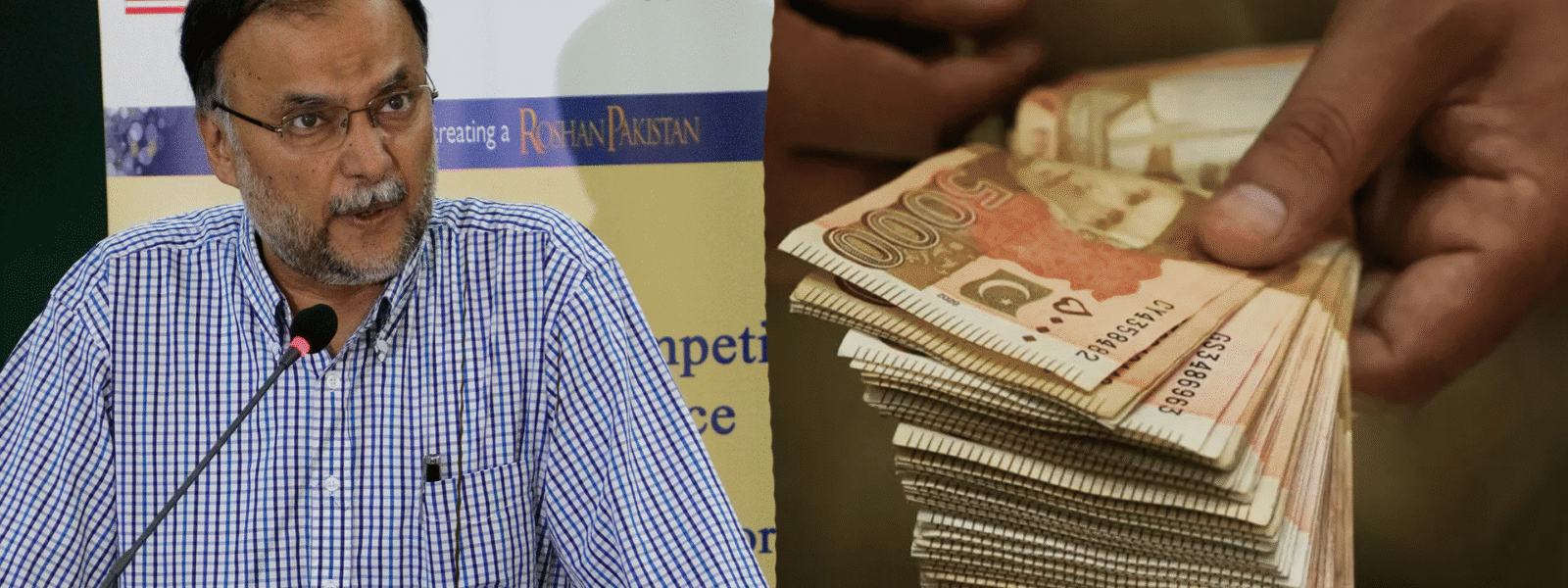
Federal Minister for Planning and Development Ahsan Iqbal has outlined an ambitious $1 trillion economy target for Pakistan by 2035, emphasizing the role of digital transformation and innovation.
In his address at the 2026 Shanghai Cooperation Organization Digital Economy Forum in Urumqi, Iqbal highlighted that Pakistan's IT and ICT exports reached a record $4.6 billion in the last fiscal year, marking significant progress in the country's digital economy.
Under the Uraan Pakistan programme, the government is focusing on exports, production, innovation, investment, and human resources to achieve the $1 trillion economy goal. The minister stated that the digital economy is part of a broader economic transformation agenda.
Iqbal reported that the number of digital users in Pakistan has exceeded 150 million, with data usage increasing by 25 percent over the past two years. Fiber connections have increased from around 3 million to more than 5 million, and the government aims to expand wired broadband access to 10 million households.
The minister noted that the gender gap in mobile internet use has narrowed from 35 percent to 8 percent, with women’s mobile internet usage increasing from 33 percent to 45 percent. He stressed that digital development must be economically effective and socially fair, particularly for women.
Pakistan’s next digital economy target is not limited to exporting services. The country aims to promote technology products, digital platforms, and technology-based industries. Iqbal described E Pakistan, one of the five key pillars of Uraan Pakistan, as an important part of the country’s economic growth and digital transformation plans.
The government is expanding capabilities in artificial intelligence, cybersecurity, cloud computing, semiconductors, advanced manufacturing, and other emerging technologies. Seven artificial intelligence centers are being established to connect research, skills development, startups, and industry.
Cooperation between China and Pakistan under CPEC 2.0 is focused on five areas: development, employment, innovation, green energy, and regional connectivity. Pakistan has proposed practical measures in four priority areas under the Shanghai Cooperation Organization, including establishing a digital trade corridor to make cross-border trade faster, easier, and less expensive.
Iqbal emphasized that Pakistan’s geographic position makes it an important link between China, Central Asia, South Asia, and the Middle East. He stated, 'We must turn regional connectivity into regional competitiveness.' Digital technology can improve efficiency and development in agriculture, industry, mining, energy, and other sectors, he added.
We must turn regional connectivity into regional competitiveness.
Ahsan Iqbal, Federal Minister for Planning and Development