Key Takeaways
- Pakistan plans to refinance short-term external debt into longer maturities.
- The overall external debt is estimated at close to $100 billion.
- The finance minister will lead Pakistan’s delegation to the World Bank Group–IMF Annual Meetings 2026.
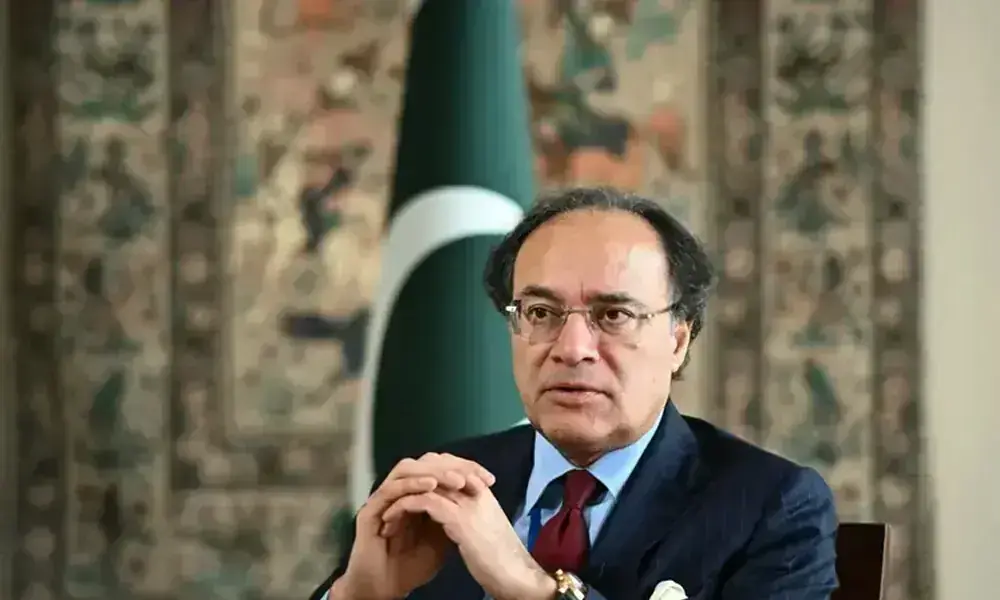
Pakistan is set to refinance some of its short-term external debt into longer maturities over the next two to three years, aiming to reduce rollover risks, according to Finance Minister Muhammad Aurangzeb. This move is part of a broader strategy to manage the country's debt profile.
Aurangzeb, speaking to Bloomberg News, explained that the primary goal is to avoid the rollover risk associated with short-term debt. He stated, 'We want to keep the overall quantum of our external debt, which is close to $100 billion, but think about it mostly as replacement rates, as diversification and elongating maturities.'
The finance minister also mentioned that Pakistan is not in a rush to issue bonds this fiscal year. Instead, the country is focusing on issuing Islamic Sukuks and dollar-settled but rupee-denominated bonds, which have garnered significant interest.
Looking ahead, Aurangzeb said, 'Going forward, we are going to issue RFPs for the remaining Panda bonds. For the first time, you are also going to see if we can go for tokenisation of our existing Eurobonds.'
During his recent trip to Bangkok, Thailand, the finance minister led Pakistan’s delegation to the World Bank Group–IMF Annual Meetings 2026, scheduled for October 12 to 18, 2026. The visit is part of Pakistan’s ongoing efforts to transition from macroeconomic stabilisation to sustainable, investment- and export-led growth.
Aurangzeb highlighted that the country sees growth above 4% and is looking to raise more than $1 billion from privatisation. The finance minister will engage in over 60 high-level meetings with international financial institutions, finance ministers, and policymakers, as well as with global investors and credit rating agencies.
The finance minister’s visit to Bangkok underscores Pakistan’s commitment to strengthening its engagement with international capital markets and development partners. This strategic move is expected to bolster Pakistan’s economic resilience and attract more foreign investment.
In conclusion, Pakistan’s plan to refinance its short-term external debt into longer maturities is a significant step towards mitigating rollover risks and ensuring the country’s financial stability. The finance minister’s visit to the World Bank Group–IMF Annual Meetings 2026 is a testament to Pakistan’s proactive approach to economic management and international collaboration.
We want to keep the overall quantum of our external debt, which is close to $100 billion, but think about it mostly as replacement rates, as diversification and elongating maturities.
Muhammad Aurangzeb, Finance Minister of Pakistan