Key Takeaways
- The dollar hovered near a two-month high on Tuesday.
- US Treasury yields reached new peaks, with the 10-year benchmark at its highest since 2007.
- Markets await US data releases, including the PCE price index and nonfarm payrolls, for clues on the Federal Reserve’s rate path.
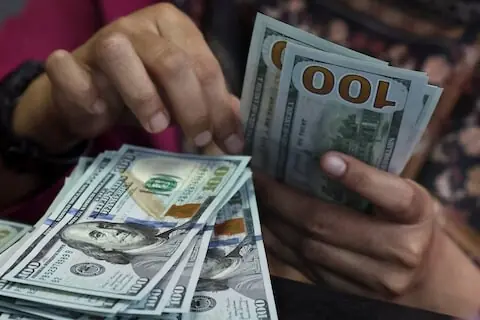
The US dollar remained near a two-month high on Tuesday, supported by volatile oil prices and a rapid increase in Treasury yields.
The euro traded at its weakest level in three months, at $1.1367, after the European Central Bank’s chief hinted at measured steps to combat inflation.
Sterling was steady at $1.3248, not far from a three-month trough, as the dollar index, which measures the US currency against a basket of peers, was higher at 101.2.
Oil prices rebounded, with Brent crude futures near $106 a barrel, as markets doubted that renewed efforts to end the Iran war would succeed.
A deepening sell-off in US Treasuries pushed yields to new peaks, with the 10-year benchmark at its highest since 2007 and the 30-year at its highest since 2004.
The monetary policy-sensitive two-year yield rose to its highest in more than two years, closing in on 5%, according to Joseph Capurso, head of foreign exchange at the Commonwealth Bank of Australia.
Markets are now seeing a more than 70% chance of a rate hike from the Federal Reserve at the end of October, up from 57% a week ago, according to CME Group’s FedWatch tool.
US data releases later in the week, including the PCE price index on Wednesday and nonfarm payrolls on Friday, are expected to support the case for further Fed rate hikes.
The Reserve Bank of Australia is expected to raise the key rate later on Tuesday, and the Australian dollar and the kiwi both traded 0.1% lower at $0.7013 and $0.5660, respectively.
The Japanese yen weakened to 157.40 per dollar, giving back a chunk of Monday’s gain after Japan’s top currency diplomat Atsushi Mimura warned markets to heed the “very clear” warning Tokyo and Washington delivered last week on the yen, leaving traders on edge over the risk of intervention.
We’re more likely to get stronger US economic data which shows that the US economy is exceptional, and I think that’s going to help to push up US interest rates compared to elsewhere, and help push up the US dollar.
Joseph Capurso, Head of foreign exchange at the Commonwealth Bank of Australia