Key Takeaways
- Prime Minister Shehbaz Sharif addressed the UN General Assembly, urging the US to end its blockade of Iran.
- He warned India that any attempt to divert Pakistan's water would be treated as an act of war.
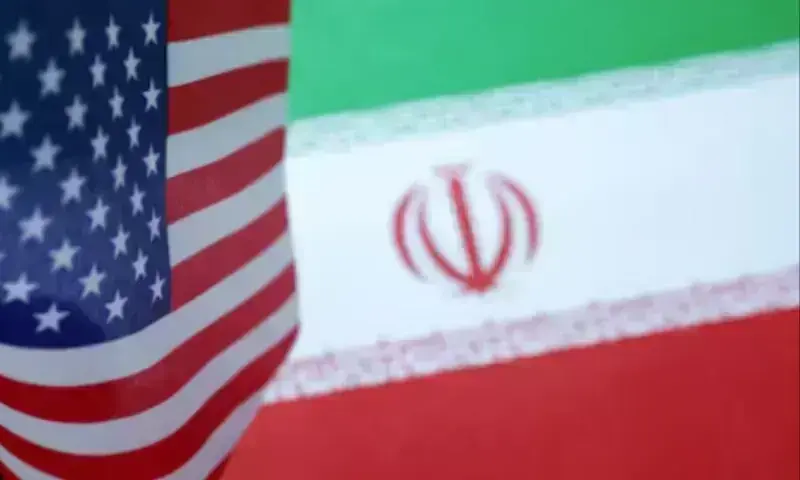
- The US and Iran are reportedly looking for an off-ramp, with Tehran offering to open the Strait of Hormuz.
Prime Minister Shehbaz Sharif, in his address to the 81st United Nations General Assembly, called for an end to the US blockade of Iran, stating that the situation should not be used as a ruse to merely suspend hostilities and stabilize oil prices until the US midterms.
Sharif highlighted that any attempt by India to divert Pakistan's share of water would be treated as an act of war, emphasizing that India’s abeyance of the Indus Waters Treaty (IWT) since last year had no legal basis and had been rejected by UN experts and the Permanent Court of Arbitration.
He stressed that water must never be weaponized, calling the Indus river system the 'lifeblood' of the entire region and warning that India must make no mistake about its position.
During his speech, Sharif also addressed last year's brief military conflict with India, which came after an attack on tourists in occupied Kashmir’s Pahalgam that killed 26 tourists, an incident New Delhi blamed on Islamabad without evidence.
The prime minister highlighted that Pakistan’s claims and actions regarding the treaty had been rejected by UN experts, leaving Pakistan “vindicated beyond any ray of doubt” in its position.
He called for a neutral investigation into the incident and praised the response of Pakistan’s armed forces under the leadership of Field Marshal Asim Munir, stating, 'Our brave and valiant armed forces, under the courageous leadership of Field Marshal Asim Munir, responded with precision and professionalism.'
Meanwhile, reports indicate that both the US and Iran are looking for an off-ramp, with Tehran offering to open the Strait of Hormuz for marine traffic if Washington ends its blockade of Iran. The key question is: who will blink first in this battle of wits, as neither side will want to appear weak.
The US must approach Iran with sincerity, and the talks must not be a smokescreen for further military action later. The blockade of Iran should be lifted and its funds released to enable a longer-term peace, while Tehran should commit to keeping Hormuz open in the interest of both its neighbours and the wider international community.
Any new agreement should cover all fronts: Gaza, Lebanon, and Yemen. Although these are separate conflicts, they are also interlinked as Iranian allies are involved in all of them fighting Israel, the US, and Saudi Arabia. Hence, a peace treaty with Iran alone may not last unless there is also calm in other regional theatres, while there is a particular need to rein in Israel’s murderous attacks on regional states.
Any attempt to stop, impede or divert Pakistan’s share of the waters will be treated as an act of war. India must make no mistake about it.
Prime Minister Shehbaz Sharif, Prime Minister of Pakistan
Water must never be weaponised. Rivers should nourish nations, not divide them.
Prime Minister Shehbaz Sharif, Prime Minister of Pakistan