Key Takeaways
- ISPR Director General Lt Gen Ahmed Sharif Chaudhry clarified that the Makkah Joint Defence Agreement has no regional aspirations.
- The agreement is intended for collective deterrence and is complementary to existing relationships.
- Pakistan will decide how to respond if any partner comes under attack.
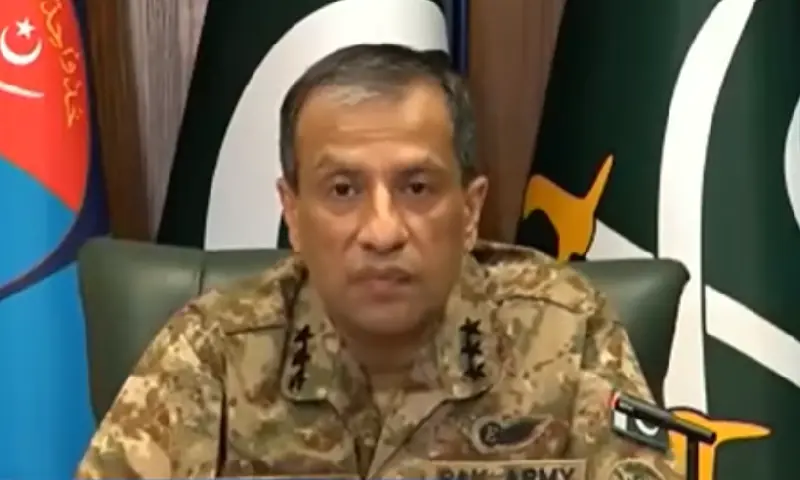
Inter-Services Public Relations (ISPR) Director General Lieutenant General Ahmed Sharif Chaudhry has clarified that the Makkah Joint Defence Agreement between Pakistan, Saudi Arabia, and Turkiye is purely defensive in nature and has no regional aspirations.
During an interview on Al Arabiya English’s ‘Global News Today’, Lt Gen Chaudhry stated that the agreement formalises Pakistan’s long-standing relationships with Saudi Arabia and Turkiye, focusing on collective deterrence and defence.
Responding to questions about the pact’s defensive nature, Lt Gen Chaudhry said, 'It is defensive. There’s nothing aggressive. There are no regional aspirations. It is collective deterrence.'
He further elaborated that the agreement is complementary, noting that the countries involved have independent relationships with other nations and alliances. 'This mutual defence agreement is complementary in nature. It is not competing with any other relationship of these countries,' he added.
When asked about Pakistan’s response to an attack on any partner, Lt Gen Chaudhry explained that the operationalisation of defensive commitments is not publicly shared. 'You see, you have multiple other agreements which are defensive in nature, which are committal in nature. But no country comes out and starts sharing its operational details,' he said.
He emphasized that the agreement is not a Muslim alliance but a regional stability pact, stating, 'It is not a club that is being made for only Muslim countries. This agreement can always encompass new, willing partners who believe in regional peace, stability, and security.'
Lt Gen Chaudhry also addressed the relationship between Pakistan and other countries, saying, 'Pakistan’s relationships with both Saudi Arabia and Turkiye had not come out of the blue. China and the world understand how historic and deeply rooted these relations are.'
The spokesperson concluded by reiterating that the three countries would decide how to respond to any potential threats, adding, 'It is for the three countries to decide, and it is for them to know and for them to actualise it.'
It is defensive. There’s nothing aggressive. There are no regional aspirations. It is collective deterrence.
Lt Gen Ahmed Sharif Chaudhry, ISPR Director General
This mutual defence agreement is complementary in nature. It is not competing with any other relationship of these countries.
Lt Gen Ahmed Sharif Chaudhry, ISPR Director General