Key Takeaways
- Islamabad High Court rules no political party can use government resources for protests.
- Court directs government to ensure roads remain open and citizens' activities are not disrupted.
- PTI accused of using slogans and attempting to forcefully enter Islamabad during past protests.
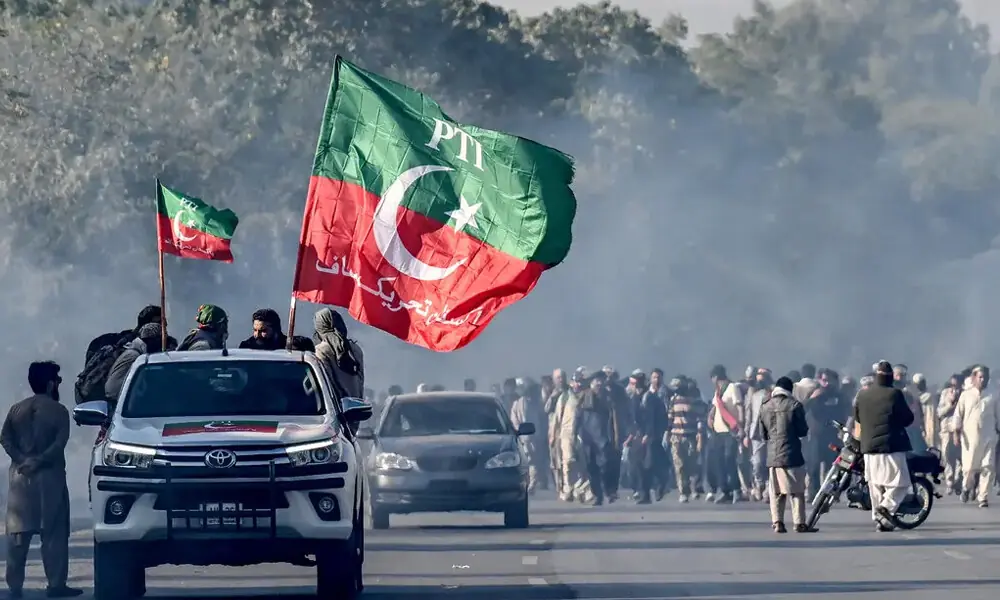
The Islamabad High Court (IHC) has ruled that no political party has the legal authority to block public places or obstruct the movement of citizens, as it issued its decision on a petition concerning a possible Pakistan Tehreek-e-Insaf (PTI) long march and protest on September 27.
The court directed the government and administration to ensure that Islamabad’s major roads remain open during any protest and that citizens’ daily activities are not disrupted. It also directed provincial governments, particularly chief ministers, to ensure that government machinery and resources are not used for political protests or marches.
Attorney General Mansoor Usman Awan, Islamabad Advocate General Naveed Malik, the prosecutor general, Khyber Pakhtunkhwa Chief Secretary Shahab Ali Shah, and KP Inspector General of Police appeared before the court. The court’s permission was granted to play videos of PTI protests in 2022 and 2024 in the courtroom.
During arguments, Islamabad advocate general alleged that government machinery had been used during the 2022 protest and that cranes were used to remove barriers placed by the Islamabad administration to stop the march. He also alleged that protesters had set fire to property at D-Chowk and repeated similar actions during the 2024 protest, which he described as an attempt to forcefully enter Islamabad.
The advocate general argued that PTI leaders were using slogans such as ‘freedom or martyrdom’, which, in his view, did not indicate a peaceful gathering. He maintained that the protest appeared to have two main objectives — the release of a prisoner and the removal of the government — and argued that both demands were unconstitutional.
He said that no protest could be held without permission from the magistrate, adding that organisers were required to submit an application under the law. Malik told the court that the administration could impose Section 144 and make security arrangements, but could not use lethal force against its own citizens if a large number of protesters entered Islamabad.
The petitioner’s counsel argued that the KP chief minister was publicly speaking about bringing four million people for the protest. He said that if such a protest over what he described as unconstitutional demands was not stopped and the court did not issue directions, the administration would be left without an effective remedy.
During the hearing, the court summoned the KP police chief to the rostrum and asked him to read out the affidavit submitted before the court. Chief Justice Sarfraz Dogar asked the IGP whether police would stop and disperse any gathering that was illegal or unconstitutional. The KP IGP assured the court that an affidavit had been submitted in accordance with its directions.