Key Takeaways
- Auto experts urge government to maintain protective tariffs to safeguard local vendors.
- Reduction in duties could shift market demand away from locally assembled vehicles.
- Local parts manufacturers fear damage to business volumes and export potential.
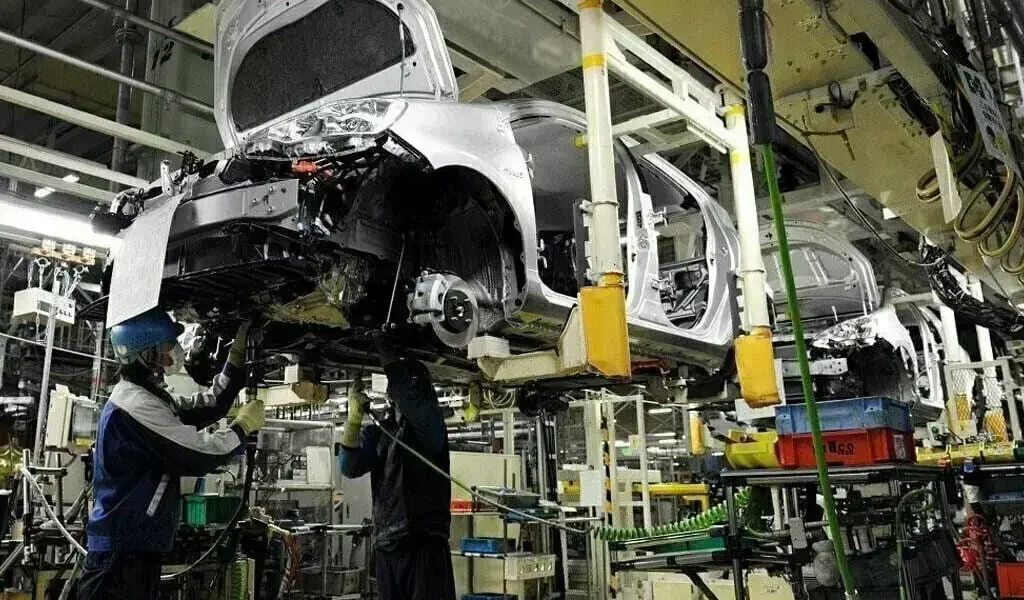
Auto experts have warned that reducing duties on completely built-up (CBU) vehicles could have detrimental effects on the local automotive industry, particularly on domestic auto-parts vendors. Aamir Allawala, an auto expert, highlighted the complex interdependent ecosystem of Pakistan’s auto sector, which includes raw materials, over 1,200 parts manufacturing vendors, and more than 100 vehicle assemblers.
Allawala explained that the local automotive production faces significant financial burdens, including high utility, interest, and taxation costs, as well as low production scales. To offset these costs, each sector requires a protective tariff differential, he stated.
The Pakistan Association of Automotive Parts & Accessories Manufacturers (PAAPAM) has proposed maintaining a minimum 50% tariff protection on completely CBU vehicle imports and a 40% tariff on locally manufactured parts. This proposal aims to protect the local vendor industry from potential market shifts.
Allawala noted that Pakistan’s auto policies from 2016 to 2026 were heavily assembly-centric, offering low tariffs on completely knocked-down (CKD) parts. While this strategy expanded assembly plants from 3 to 14 global brands, localisation remained weak. Traditional Japanese assemblers achieved 65% local content (by value), whereas Korean brands hit 25%, and Chinese brands managed less than 10%.
The expert further warned that the National Tariff Policy (NTP)’s proposed 15% peak tariff reduction could destroy local parts manufacturing. He emphasized that lowering duties on completely built-up vehicles risks shifting market demand away from domestic assembly, critically damaging business volumes for local parts vendors.
Local parts manufacturers, according to Allawala, meet global standards and export over $200 million annually, with a 10-fold growth potential. However, four external structural factors restrict this growth: security concerns, weak free trade agreements, rising production costs, and lack of state incentives.
Allawala highlighted that regional auto manufacturing countries heavily safeguard their strategic domestic industries. India, Thailand, and Indonesia impose strict CBU tariffs of 120%, 80%, and 55%, respectively, and ban used vehicle imports. In contrast, Pakistan maintains a low 30%–50% tariff despite a much smaller market of 0.25 million units compared with 6 million for India, 1.5 million for Thailand, and 1.2 million for Indonesia.
The auto parts manufacturers in Pakistan operate in a challenging environment, where security concerns, weak free trade agreements, rising production costs, and lack of state incentives restrict their growth potential. Allawala called for the government to improve its performance to remove growth barriers for the private sector.
He concluded that it is essential for the government to implement measures to protect the local vendor industry and ensure the sustainability of the automotive ecosystem in Pakistan.