Key Takeaways
- The U.S. aircraft carrier Abraham Lincoln left Thailand after a five-day visit.
- The visit included a statement of gratitude from the ship's commanding officer.
- The Lincoln was involved in naval operations in the Middle East, including the U.S. naval blockade and combat with Iran.
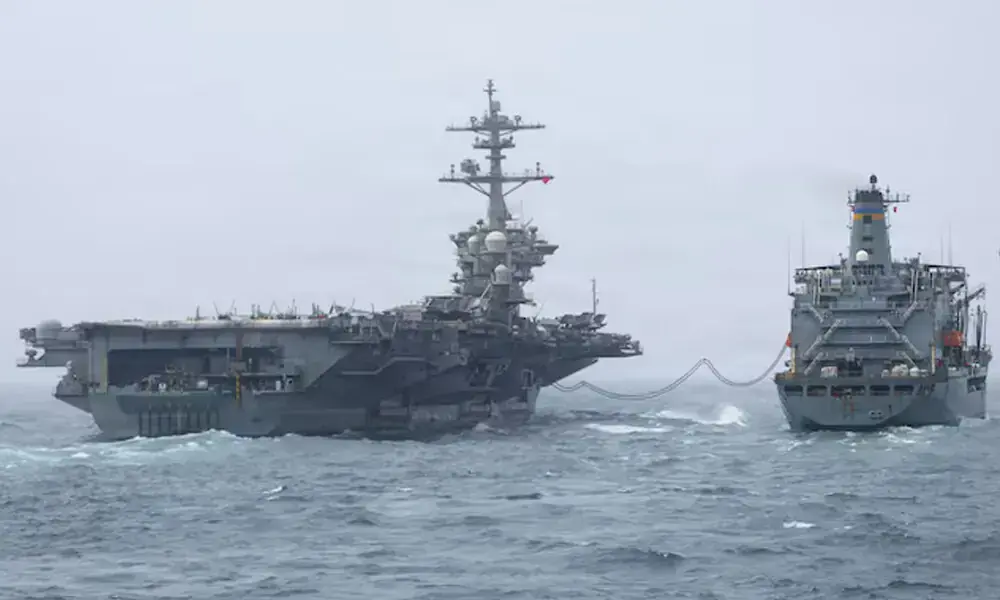
The U.S. aircraft carrier Abraham Lincoln departed Thailand on Sunday, bringing to an end a five-day respite from its extended deployment in the Middle East.
Commanding Officer U.S. Navy Captain Dan Keeler expressed gratitude to the Thai people, stating, “We would like to thank the people of Thailand for their incredible hospitality.”
Typical naval deployments last for six to nine months, but during times of conflict, these deployments can be extended, as was the case with the Abraham Lincoln.
The nuclear-powered Lincoln, carrying approximately 5,000 personnel, was involved in the U.S. naval blockade and combat operations in the war with Iran, according to Democratic lawmakers.
The visit to Thailand, the United States’ only treaty partner in mainland Southeast Asia, was part of a broader strategy to maintain regional presence and cooperation.
The Lincoln arrived in Pattaya, a resort city about 150 km southeast of Bangkok, early on Wednesday, where sailors and Marines disembarked and were welcomed by busloads of civilians.
The visit was marked by the arrival of sailors and Marines in civilian clothes, many of whom were seen smiling and waving upon their arrival.
During its stay, the Abraham Lincoln was accompanied by other U.S. naval vessels, highlighting the ongoing military presence and operations in the region.
We would like to thank the people of Thailand for their incredible hospitality.
U.S. Navy Captain Dan Keeler, Commanding Officer, Abraham Lincoln