Key Takeaways
- Most Gulf bourses ended lower on Thursday due to fears of a full-blown conflict.
- Iran has warned it could further restrict regional energy exports, declaring an 'existential war' with the U.S.
- The Strait of Hormuz remains closed, impacting global oil and gas shipments.
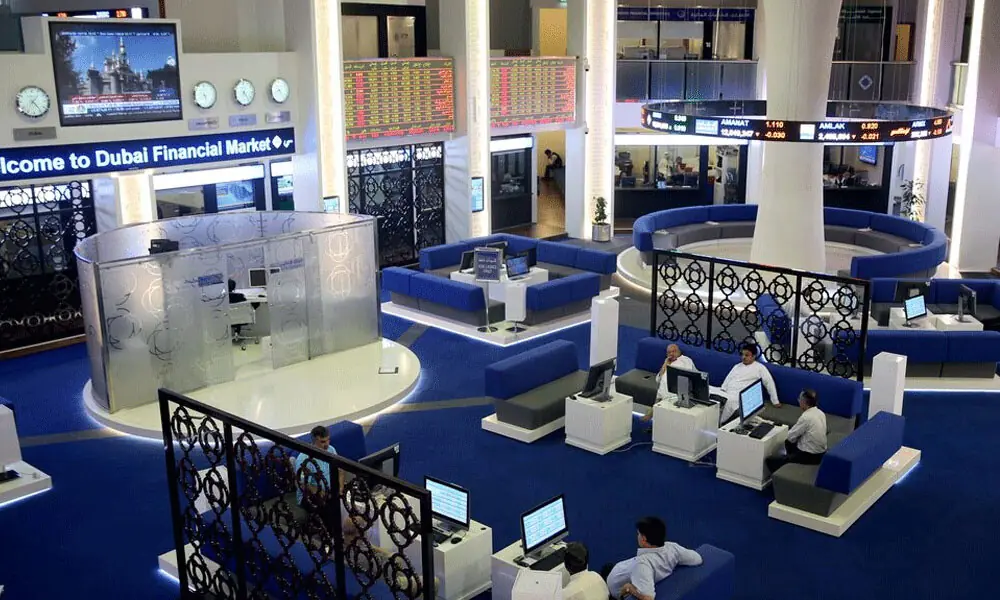
Most Gulf stock markets experienced declines on Thursday as tensions between the United States and Iran escalated. Reports indicated that a fresh round of U.S. strikes on Iranian military sites had stoked fears of an all-out conflict.
The U.S. has reinstated a naval blockade of Iranian ports, while Tehran warned it could further restrict regional energy exports, declaring itself in an 'existential war' with Washington. This development comes after Iran announced the closure of the Strait of Hormuz on Saturday, which has prevented vessels from passing through the critical waterway.
The ongoing military operations have added to uncertainty, particularly regarding second-quarter earnings and Middle East developments. Market analysts noted that reports of potential broader U.S. operations could add further pressure. Milad Azar, a market analyst at XTB MENA, stated: 'Investors remain focused on second-quarter earnings and Middle East developments, while uncertainty around Iran and the Strait of Hormuz is likely to keep overall sentiment restrained.'
Dubai’s main share index dipped 0.3%, led by a 2.4% slide in sharia-compliant lender Dubai Islamic Bank. Abu Dhabi's index fell 0.5%. In Saudi Arabia, the benchmark index edged 0.2% higher, with Al Rajhi Bank contributing to this rise.
Outside the Gulf, Egypt’s blue-chip index rose 0.7%, while other markets such as Bahrain and Oman experienced declines of 1.2% and 1.2%, respectively. Kuwait added 0.1% to its benchmark index.
The U.S. State Department announced on Wednesday that it had approved the potential sale of advanced precision kill weapon systems and related equipment to Saudi Arabia for an estimated $1.96 billion, further highlighting the ongoing tensions in the region.
Additionally, bunker fuel sales at the UAE’s Fujairah port in the first half of 2026 more than halved compared to last year, after the U.S.-Iran war disrupted supplies at this key Middle Eastern ship refuelling hub located near the Strait of Hormuz. This disruption underscores the significant impact on global energy markets.
The Qatar Stock Exchange remained closed following the death of former emir Sheikh Hamad bin Khalifa Al Thani, adding to the regional uncertainty.