Key Takeaways
- The Large-Scale Manufacturing sector grew 5.77% year-on-year in the first 11 months of 2025-26.
- Automobiles and food products were key contributors to this growth, with respective contributions of 1.53 percentage points and 1.36 percentage points.
- Pharmaceutical production contracted by 8.07% during the same period.
The Large-Scale Manufacturing (LSM) sector in Pakistan has shown signs of revival, growing by 5.77% year-on-year over the first 11 months of the fiscal year 2025-26, according to figures released by the Pakistan Bureau of Statistics (PBS).
The Quantum Index of Manufacturing (QIM) for July-May FY26 stood at 121.65, marking a significant improvement from the previous year's figure of 115.02.
Despite this overall growth, May saw a slight contraction in LSM production by 0.98%, but it rebounded with a 1.21% increase in April, indicating fluctuating trends within the sector.
The automobile sector emerged as the biggest contributor to the growth, with a remarkable surge of 58.82% during the fiscal year. This was primarily driven by a 60.60% rise in jeep and car production, followed closely by trucks at 76.88% and buses at 23.66%. Light commercial vehicles, however, saw a decline of 11.27%.
Food products also played a significant role, contributing 1.36 percentage points to the overall growth. The food group output rose by 7.75%, with notable increases in sugar, bakery, and chocolates sectors, recording a 31.54% surge.
While the automobile sector thrived, several other industries faced challenges. Pharmaceutical production contracted by 8.07%, chemicals declined by 2.64%, iron and steel products fell by 7.49%, and fertiliser output dropped by 2.25%. Textile production remained virtually flat with a marginal decline of 0.09%.
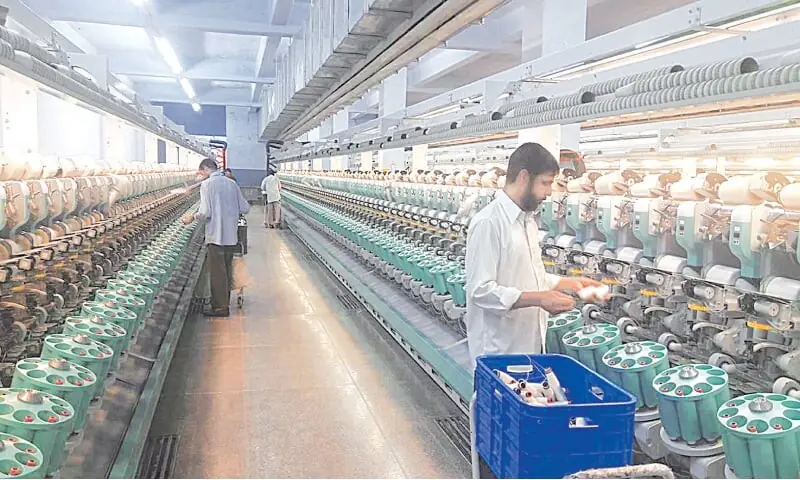
The textile sector, which is the largest manufacturing segment by index weightage, saw cotton yarn increase by 1.26% and cotton cloth rise by 0.17%, accounting for more than 80% of the sector's growth. However, this was offset by a decline in export unit value due to lower demand for textiles.
Garment exports showed resilience with a 7.31% increase during the same period, while petroleum products surged by 10.56%, driven mainly by increases in petrol and high-speed diesel production.