Key Takeaways
- Brent crude rose to its highest level since June 12, reaching $86.19 a barrel.
- Iran launched retaliatory strikes on U.S. infrastructure in the region.
- Tensions between the U.S. and Iran have heightened concerns over energy supply disruptions.
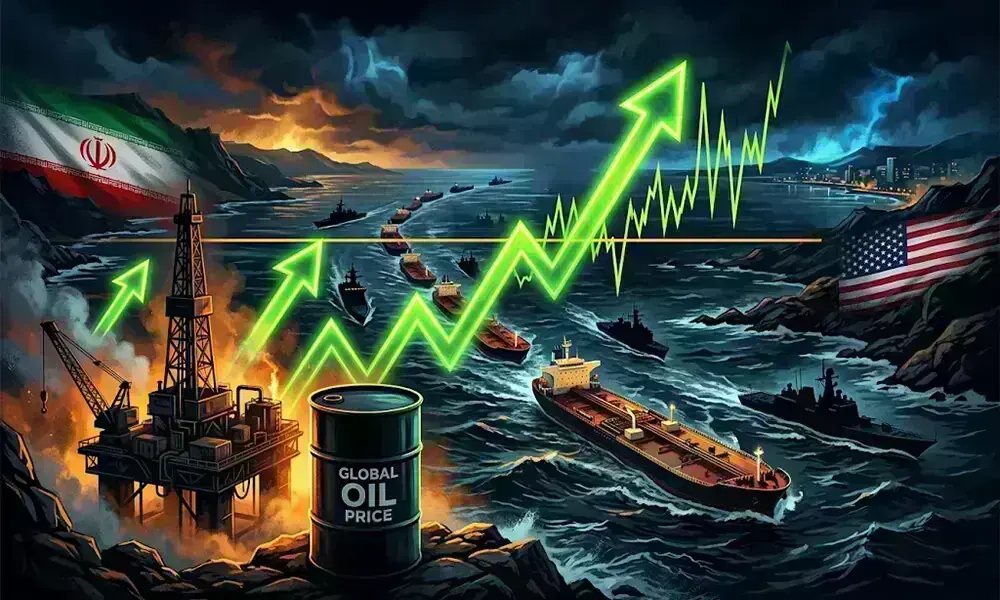
Oil prices surged on Wednesday as tensions between the United States and Iran escalated, with President Donald Trump reimposing a naval blockade on all Iranian ports and launching retaliatory strikes against US infrastructure in the region. The price of Brent crude rose to its highest level since June 12, reaching $86.19 a barrel by 0029 GMT, while West Texas Intermediate (WTI) climbed to $80.40 a barrel, up from $79.30 on Tuesday.
In an interview aired Tuesday night on ‘Special Report with Bret Baier,’ Trump stated: 'I’ll save the energy targets for last, but ultimately we’ll hit energy targets.' This statement came as Iran’s army claimed to have launched drone attacks against U.S. positions at Jordan’s Azraq base and targeted weapons and storage facilities in Bahrain and Kuwait.
The U.S. military announced early on Wednesday that it had begun a fresh round of strikes 'to continue degrading Iranian capabilities used to attack commercial shipping in the Strait of Hormuz.' Iran responded by closing the strait, which is crucial for global oil transit, after hostilities between the two nations reignited last week.
The flare-up over the last few days has heightened doubts that a memorandum of understanding signed last month would lead to a permanent halt to the war. Tim Waterer, chief market analyst at KCM Trade, noted: 'The chances of oil moving back toward $100 in the reasonably near term are still meaningful if hostilities intensify which damages energy infrastructure around the Gulf.'
Iran’s Islamic Revolutionary Guard Corps claimed they had targeted weapons and storage facilities in Bahrain and Kuwait. Reuters could not immediately verify these reports, but the situation has raised concerns about potential supply disruptions in the Strait of Hormuz, where one-fifth of the world's oil and liquefied natural gas transit.
The U.S. military’s statement on Wednesday emphasized its commitment to degrading Iranian capabilities: 'We will continue to take action to protect American interests and those of our allies.' Iran, however, rejected US pressure and vowed not to negotiate under any circumstances. The country's foreign ministry spokesperson stated that negotiations were off the table unless the U.S. lifted sanctions.
The surge in oil prices has significant implications for global markets, with analysts warning that further escalation could drive prices even higher. 'For now, the risk premium is still embedded,' said Waterer, noting that Brent prices could remain at $75-$80 a barrel if diplomatic efforts help reopen the strait.
The ongoing tensions between the U.S. and Iran have also raised concerns about the stability of energy supplies in the region. Analysts suggest that while a diplomatic solution remains possible, the current situation is fraught with risks for global oil markets.
'I’ll save the energy targets for last, but ultimately we’ll hit energy targets.'
Donald Trump, President of the United States
'The chances of oil moving back toward $100 in the reasonably near term are still meaningful if hostilities intensify which damages energy infrastructure around the Gulf.'
Tim Waterer, Chief Market Analyst at KCM Trade