Key Takeaways
- The benchmark KSE-100 Index gained nearly 2,700 points in early trading.
- Escalating geopolitical tensions in the Middle East caused a significant drop on Tuesday.
- International markets showed mixed reactions with some gains and others experiencing volatility.
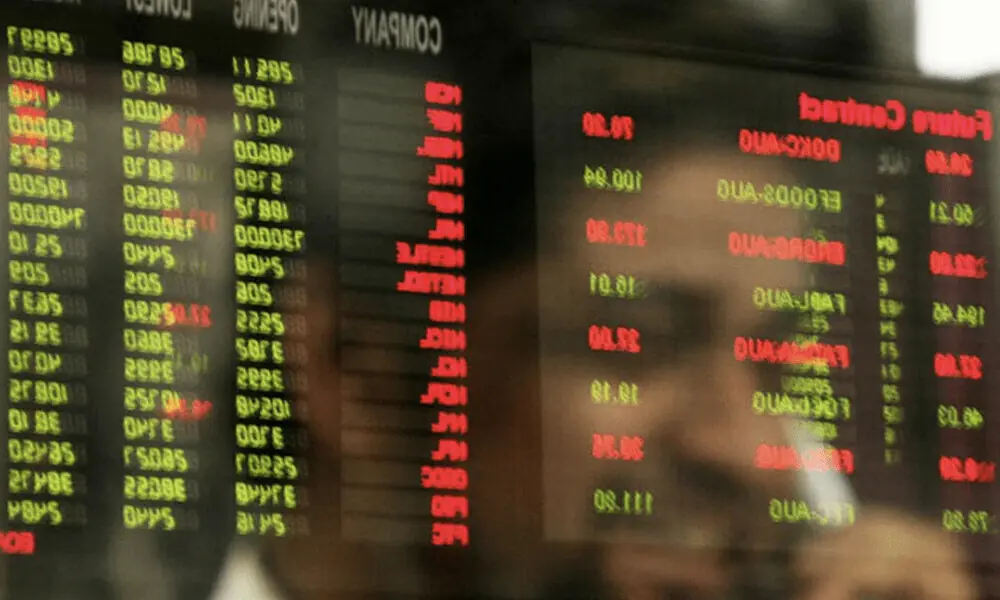
The Pakistan Stock Exchange (PSX) witnessed a strong rebound as buying interest returned, with the benchmark KSE-100 Index surging nearly 2,700 points in early trading on Wednesday. At 9:38am, the index stood at 176,192.90, marking an increase of 1.54%.
Key sectors such as automobile assemblers, cement, commercial banks, oil and gas exploration companies, OMCs, power generation, and refineries saw positive trading activity. Major index-heavy stocks including ARL, HUBCO, MARI, OGDC, PPL, POL, MCB, MEBL, NBP, and UBL traded in the green.
The previous day had been marked by one of the worst trading sessions for the PSX, with the KSE-100 Index plummeting 6,408.23 points or 3.56% to close at 173,518.82 points due to escalating geopolitical tensions in the Middle East, particularly concerns over a potential conflict between the United States and Iran.
Internationally, markets showed mixed reactions with some gains and others experiencing volatility. Asian markets were higher after a surprise slowdown in U.S. inflation reduced expectations for interest rate hikes, while oil prices took a breather following the U.S.'s decision to scrap plans of levying shipping through the Strait of Hormuz.
In other global developments, South Korea's chipmaker-heavy KOSPI surged 6% in early trade and Japan’s Nikkei rose 0.4%. MSCI’s broadest index of Asia-Pacific shares outside Japan also saw a rise of 1.7%. The U.S. dollar dropped except against the stubbornly weak yen, while short-end bonds rallied, taking two-year Treasury yields down to 4.19% from an earlier high.
The U.S. headline consumer price index fell by 0.4% in June for the first time since the COVID-19 pandemic, with annualised core inflation at 2.6%, below expectations of 2.8%. This development further dampened market expectations for interest rate hikes and contributed to the overall positive sentiment in international markets.
Analysts attribute the surge in the KSE-100 Index to a combination of improved investor confidence, reduced geopolitical tensions, and positive global economic indicators.