Key Takeaways
- The Pakistani rupee appreciated 0.01% against the US dollar.
- At close, the local currency settled at 278.07, up from 278.10 on Tuesday.
- US dollar strengthened to its highest level in a week amid renewed strikes on Iran.
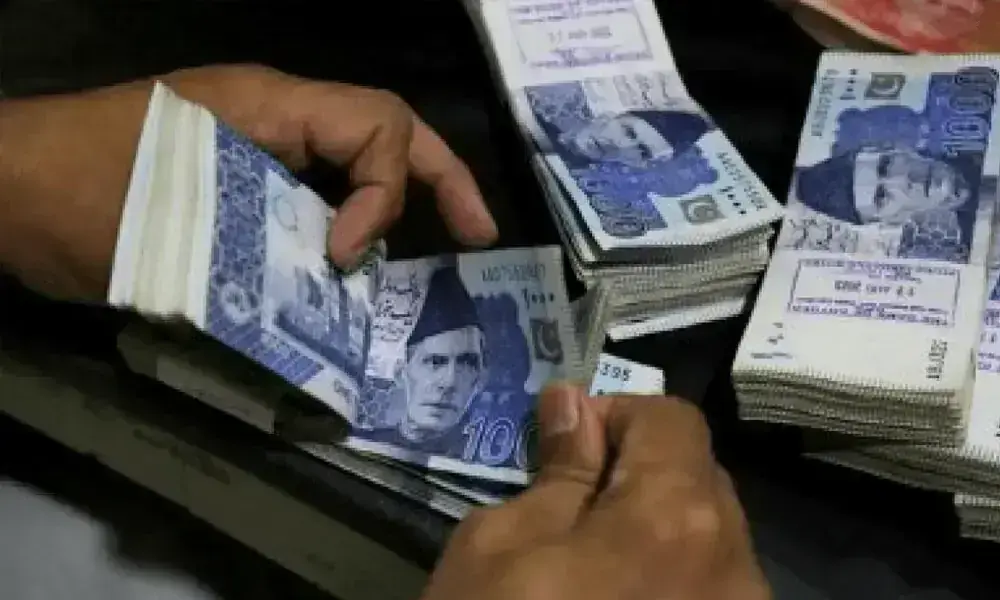
The Pakistani rupee registered a marginal gain of 0.01% against the US dollar in the inter-bank market on Wednesday, closing at 278.07 after opening at 278.04. This slight appreciation brought the local currency up from its previous day's close of 278.10.
In the open market, the rupee showed a more significant fluctuation, losing 3 paise for buying and remaining unchanged for selling against the US dollar, closing at 278.80 and 279.40 respectively. Against the euro, the rupee gained 37 paise for buying but lost 34 paise for selling, ending at 318.80 and 321.87.
The US dollar saw a notable strengthening, reaching its highest level in a week amid renewed strikes on Iran by the United States. The greenback appreciated to 162.46 yen and $1.1405 against the euro, while the British pound weakened slightly to $1.3351.
New Zealand's currency also saw significant movement after its central bank raised interest rates by 25 basis points to 2.5%, leading to a 0.5% gain in the kiwi dollar. The Reserve Bank of New Zealand indicated that further rate hikes may be necessary to control inflation pressures.
Oil prices surged nearly 5% on Wednesday, reaching their highest levels since June 22, with Brent crude futures climbing $3.81 or 5.14% to $77.97 a barrel and US West Texas Intermediate crude increasing by $3.36 or 4.77% to $73.80 a barrel.
The US dollar index, which measures the currency against a basket of six peers, reached its highest level since July 2 at 101.210. This strengthening of the greenback had implications for other currencies and commodity prices globally.
These market movements reflect ongoing geopolitical tensions and economic policies that influence global financial markets. The Pakistani rupee's slight gain against the US dollar is a positive sign, but its performance in the open market indicates volatility in investor sentiment.