Key Takeaways
- European governments are quietly negotiating with the Taliban over deportations.
- Deportees face economic hardship in Afghanistan, with limited resources.
- Contradiction exists between diplomatic non-recognition and practical engagement.
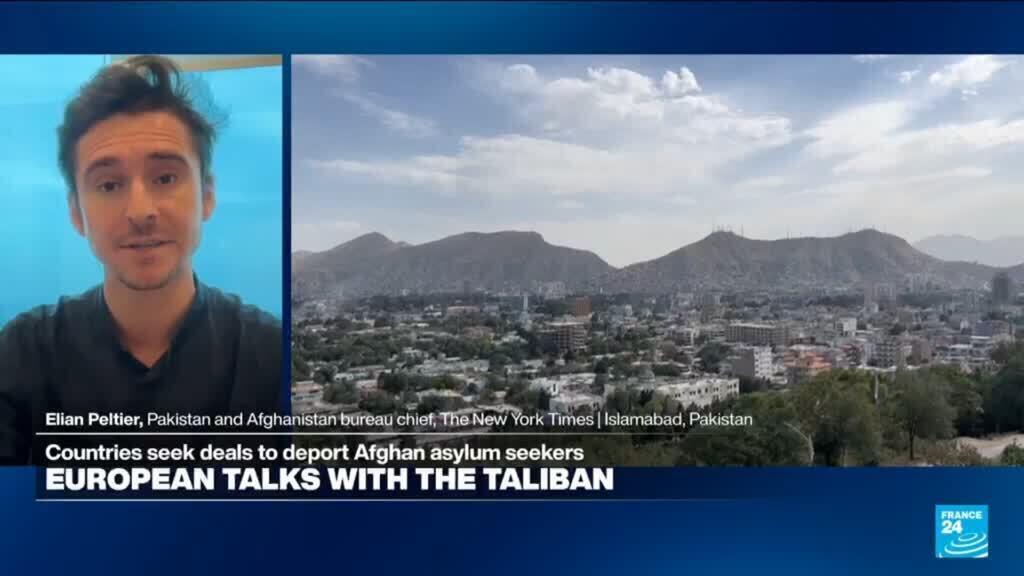
European deportees from Afghanistan are facing a stark reality as they return to a country grappling with severe economic challenges. According to an investigation by The New York Times, European governments are quietly expanding negotiations with the Taliban, despite official non-recognition of the administration.
Elian Peltier, Pakistan and Afghanistan bureau chief, reports that European governments are meeting the Taliban more frequently than previously acknowledged. 'Even though on paper European governments do not recognise the Taliban administration, in practice they meet much more frequently than most of us know,' Peltier explains.
The situation is particularly dire for those deported to Afghanistan. 'Quite horrifying,' Peltier describes the economic crisis, noting that deportees are left with 'very little' to return to. The Taliban's control over the economy has led to widespread poverty and a lack of basic resources.
Deportees are struggling to find employment and basic necessities. 'The situation is dire,' Peltier states, highlighting the contradiction between the official stance and the practical reality of engagement.
The economic crisis in Afghanistan is exacerbated by the Taliban's policies and the international sanctions that have been imposed. 'The economy is in a state of collapse,' Peltier adds, pointing to the severe shortages of food, medicine, and other essential goods.
The situation is not limited to a specific region or group. Peltier's investigation reveals that deportees across various regions are facing similar challenges. 'The crisis is affecting the entire country,' he notes, underscoring the widespread impact of the economic downturn.
The practical engagement with the Taliban by European governments is driven by the necessity to manage the flow of migrants and address the humanitarian crisis. 'While the official stance remains non-recognition, the practical engagement is undeniable,' Peltier concludes, highlighting the complex and often contradictory nature of international relations.
The ongoing negotiations and practical engagement raise questions about the future of diplomatic relations and the potential for a more formal recognition of the Taliban administration. 'The situation is evolving, and the contradictions are becoming more apparent,' Peltier observes, emphasizing the need for a nuanced approach to the crisis.
Even though on paper European governments do not recognise the Taliban administration, in practice they meet much more frequently than most of us know.
Elian Peltier, Pakistan and Afghanistan bureau chief, The New York Times