Key Takeaways
- In Ibrahim Hyderi, Karachi, traditional boat-building practices continue despite industrial competition.
- Craftsmen like Muhammad Asif work tirelessly to construct wooden boats using centuries-old techniques.
- The process is labor-intensive, with a small boat taking up to three months to build and costing Rs1 million.
In a coastal neighbourhood of Karachi, the rhythmic hammering of nails and the whine of saws echo through Ibrahim Hyderi, a maritime town believed to date back centuries. Here, traditional wooden boats are built by skilled craftsmen, preserving Karachi’s fishing heritage.
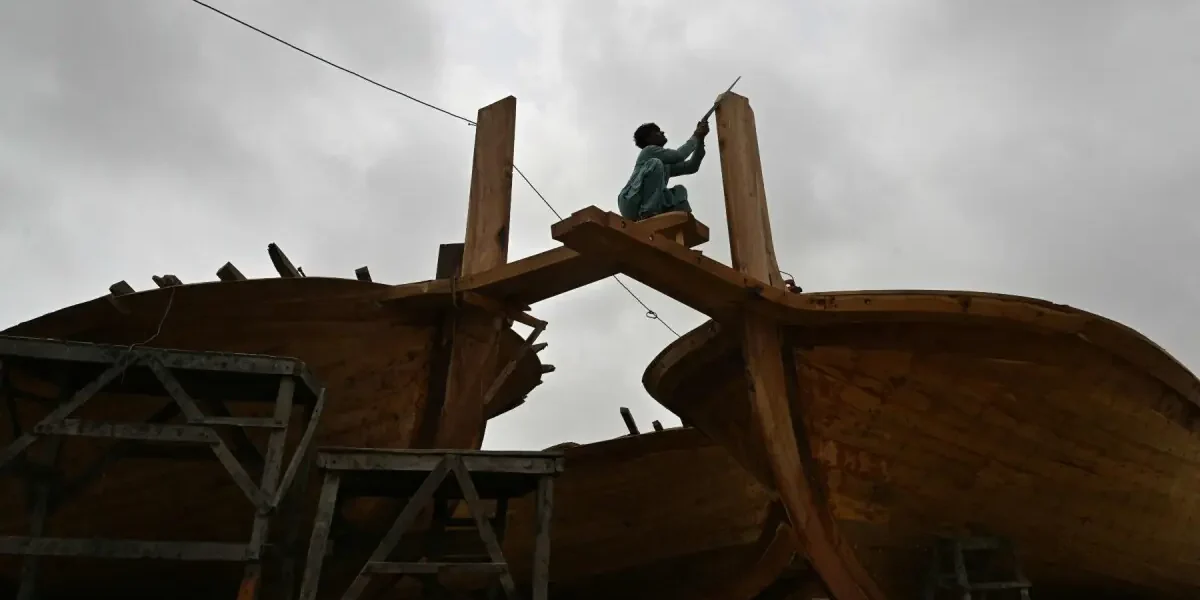
Muhammad Asif, 22, a boat-builder who learned the craft from his father, is proud of his work. 'I was drawn to this work, so I work at it with great dedication,' he says, as sawdust coats his face and sun-bleached hair.

Asif, like other workers, starts his day at 7 am and heads home for dinner around 7 pm, only putting down his tools during a two-hour lunch break. He earns up to Rs2,500 a day, working six days a week. Despite the long hours, he is committed to his craft.
The boat-building process begins with a fisherman selecting a boat design. A master craftsman drafts a template, and the workers take it from there, drawing on their years of experience to painstakingly build the vessel. The carpenters choose from different types of timber, such as local eucalyptus wood or African teak for resilience against seawater.
Heavy blocks of wood are carefully cut using well-worn vertical and other saws, following hand-drawn pencil markings. The boats are then assembled from the ground up, block by block and nail by nail, with the workers clambering up on rickety ladders as the hulls rise higher. The time-consuming process means even a small boat measuring just several metres long could take up to three months to construct and cost Rs1 million, Asif says.
Across the yard, the completed boats are given splashes of colour by painter Muhammad Ismail. The weather-beaten 38-year-old, his hands and nails tinged with blue, is painting petals on the hull of a vessel — one of many he has painted.
Despite the rise of industrial shipbuilding, such practices — where handcrafted vessels are assembled timber by timber — have stood their ground. Ibrahim Hyderi is renowned for the construction of traditional fishing boats, and this area is believed to have given birth to Karachi, providing the city with its fishing sector.
Workers brave the elements all year round, including the sweltering heat and humidity of summers and the soaking rains of the monsoon seasons. This dedication ensures that the traditional skills and knowledge are passed down to the next generation, keeping Karachi’s fishing heritage afloat.
I was drawn to this work, so I work at it with great dedication.
Muhammad Asif, Boat-builder
This is the area that gave birth to Karachi, and that provided Karachi with its fishing sector.
Mehran Ali Shah, Pakistan Fisherfolk Forum